How to Choose the Right Industrial Centrifugal Fan for Your Needs?
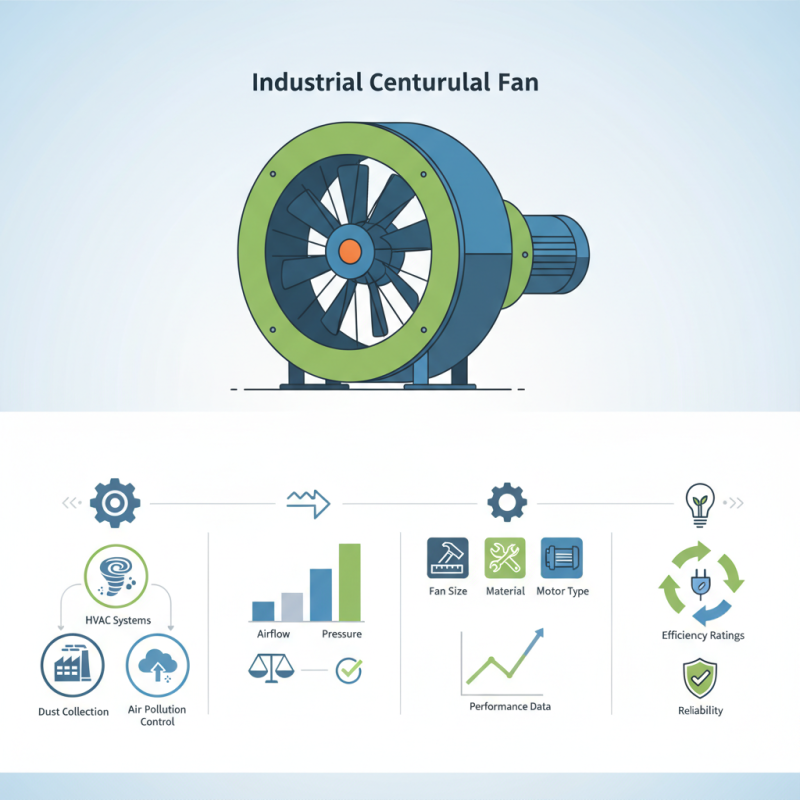
Choosing the right industrial centrifugal fan is critical for various applications. An industrial centrifugal fan plays a significant role in HVAC systems, dust collection, and air pollution control. Selecting the wrong fan can lead to inefficiencies and increased operational costs.
Different industries have specific airflow and pressure requirements. These requirements directly influence the fan's performance. It can be challenging to navigate the many options available. Factors like fan size, material, and motor type must be considered carefully. The performance data should be analyzed thoroughly to ensure compatibility.
The decision-making process often reveals gaps in understanding. Common mistakes include overlooking maintenance needs and efficiency ratings. Reflecting on these aspects helps avoid future issues. Investing time in research pays off. Making informed choices leads to better performance and reliability in your operations.
Understanding Industrial Centrifugal Fans and Their Applications
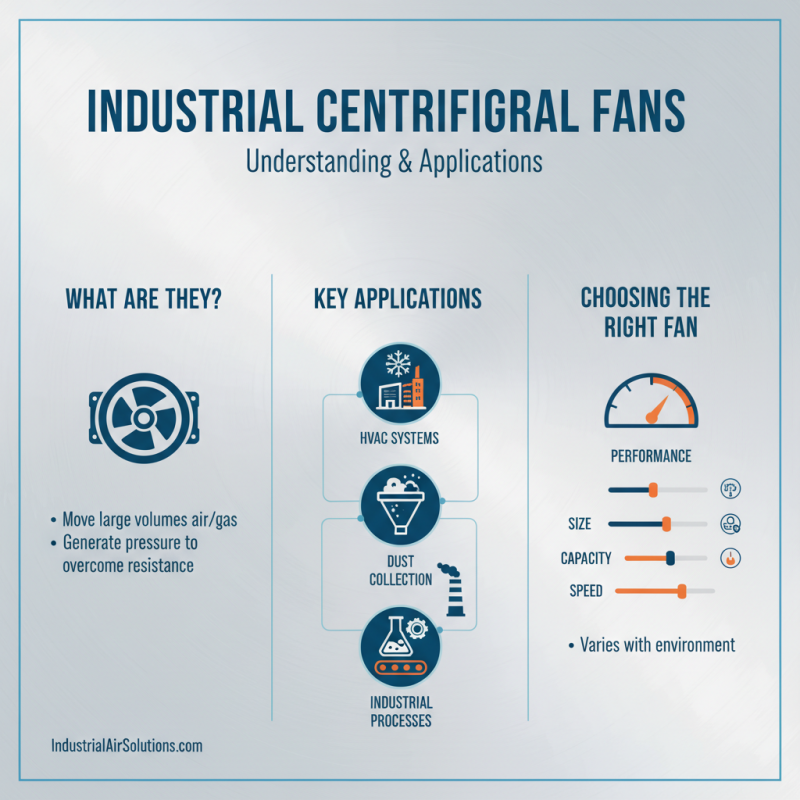
Industrial centrifugal fans play a crucial role in various applications. They are used in HVAC systems, dust collection, and industrial processes. Understanding their design can help choose the right fan for specific needs. Fans vary in size, capacity, and speed, affecting their performance in different environments.
In many cases, the choice of fan impacts efficiency and operational costs. Selecting a fan requires knowledge of airflow, pressure, and noise levels. Not every fan is suitable for every task. It is essential to consider the specific requirements of your application. For instance, high static pressure fans work well in systems requiring significant airflow against resistance.
Installing an inappropriate fan can lead to performance issues. The wrong choice can result in higher energy consumption. It may also cause excessive wear and noise. Some installations might not provide the required air volume, affecting process efficiency. Rethinking your choice might lead to better performance and savings in the long run.
Key Factors to Consider When Selecting a Centrifugal Fan
When selecting an industrial centrifugal fan, several key factors come into play. Understanding the required airflow and pressure is crucial. Know your system's specifications to ensure optimal performance. If the airflow is too high, energy costs increase. On the other hand, insufficient airflow can compromise efficiency.
Another important aspect to consider is the fan's construction material. Common materials include steel and aluminum. Each has its advantages. Steel offers durability, while aluminum is lighter and resistant to corrosion. Make sure to assess the environment where the fan will operate. Exposure to chemicals or extreme temperatures may dictate the best choice.
Noise level is another vital consideration. Fans can produce significant sound during operation. Evaluating the acceptable noise level for your facility is essential. Consider how the fan's location affects sound distribution. Often, reflections from walls can amplify noise. It’s worthwhile to seek options that offer quiet operation without sacrificing performance. Making the right choice involves balancing these factors carefully to meet your specific needs.
How to Choose the Right Industrial Centrifugal Fan for Your Needs?
| Factor |
Description |
Importance Level |
| Airflow Rate |
The amount of air the fan can move, typically measured in CFM (Cubic Feet per Minute). |
High |
| Static Pressure |
The resistance against the airflow within the system; crucial for selecting a fan that can overcome losses. |
High |
| Efficiency |
The ratio of the fan's output power to the input power, indicating energy consumption vs. performance. |
Medium |
| Noise Level |
The sound generated by the fan during operation, measured in decibels (dB). |
Medium |
| Blade Design |
The shape and material of the blades can affect performance, efficiency, and noise levels. |
Medium |
| Size and Space |
Consideration of the physical dimensions of the fan and the installation space available. |
High |
| Cost |
The total expenditure, including purchase, installation, and maintenance costs over time. |
High |
Evaluating Performance Specifications of Centrifugal Fans
Choosing the right industrial centrifugal fan involves careful evaluation of performance specifications. Key specifications include airflow, pressure, and efficiency. Each application may demand different characteristics. Understanding these parameters is essential to ensure optimal performance.
Airflow is measured in cubic feet per minute (CFM). It indicates how much air the fan can move. A high CFM is vital for cooling applications. In contrast, a lower CFM may suffice for ventilation purposes. Pressure, measured in inches of water gauge (WG), reflects the fan’s ability to overcome resistance in the system. Fans designed for high static pressure environments need robust design to maintain efficiency.
Efficiency is not always straightforward. Higher efficiency is preferred, but it often correlates with specific operational conditions. The best fan for one setup may not perform well in another. Sometimes, fans underperform due to mismatched specifications. Evaluating these aspects allows for informed decisions. Customization may be necessary for unique requirements. As technologies evolve, staying updated on new advancements contributes to better choices.
Material and Design Considerations for Durability
When selecting an industrial centrifugal fan, material and design are crucial. The fan's durability directly impacts its lifespan and efficiency. Stainless steel is often preferred. It resists corrosion and withstands harsh environments. Aluminum might be lighter but is less durable over time. Consider your operating conditions carefully. Extreme temperatures and humidity can expedite wear.
Design also plays a significant role. Look for fans with reinforced structures. A well-designed fan minimizes vibrations, leading to a longer service life. However, a sturdy design might increase initial costs. It's essential to balance cost against potential maintenance savings.
Regular evaluations and maintenance can highlight overlooked durability issues, ensuring your equipment remains reliable over time. A wise choice today can save headaches tomorrow.
Assessing Noise Levels and Energy Efficiency in Fan Selection
When selecting an industrial centrifugal fan, noise levels and energy efficiency are critical factors. High noise levels can disrupt work environments and negatively impact employee health. Using fans with noise-reducing features is advisable. Some fans come with specially designed blades or sound insulation, which can significantly lower operational noise. It's wise to request decibel ratings from manufacturers. This ensures the fan suits your workplace conditions.
Energy efficiency is another vital consideration. Fans consume substantial energy, impacting operational costs. A fan's efficiency is often indicated by its motor power and airflow rate. Opting for models with a higher efficiency rating can save money long-term. Moreover, consider the type of applications the fan will support. Some applications may require more energy, so choosing the right fan can prevent unnecessary energy waste.
Analyzing your specific needs is essential. Real-world feedback from other users can provide insights into performance and efficiency. You may find that initial research leads to more questions than answers. Speaking to industry experts can help clarify the best options for your scenario. Trust the collective knowledge found in user experiences, but be mindful of varying requirements.