Top 10 Tips for Choosing the Best Inflatable Blower?
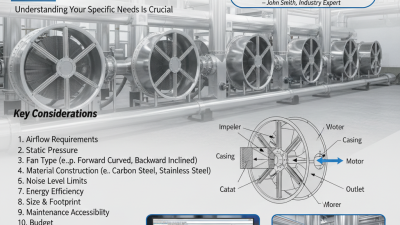
Choosing the right inflatable blower can be challenging. According to industry expert John Smith, “A quality blower makes all the difference in your inflatable’s performance.” This statement highlights the importance of selecting the right equipment.
Consider the specific needs of your inflatable. Different sizes and types require different blowers. For example, a large inflatable castle needs more power than a small decoration. Many people overlook the significance of airflow and pressure ratings. These factors play a crucial role in ensuring your inflatable remains fully inflated throughout an event.
Moreover, it's easy to get lost in a sea of options. Some blowers are loud and heavy, making transportation difficult. Others may not deliver the required air pressure, affecting durability. Reflecting on these aspects helps narrow down choices. Understanding the right features can guide you toward an optimal inflatable blower that meets your expectations.
Key Factors to Consider When Choosing an Inflatable Blower
Choosing the right inflatable blower is crucial for optimal performance. Start by identifying your power needs. Consider the size of the inflatable you plan to use. A larger inflatable requires a more powerful blower to inflate quickly. Pay attention to the blower’s airflow capacity measured in cubic feet per minute (CFM). Higher CFM ratings ensure quicker inflation, saving time at events.
Noise levels are another important factor. Some blowers can be quite loud. If you’ll be using it in public spaces, low noise options are preferable. Inspect the blower for portability as well. A lightweight design makes transport easier. Check the cord length too; a longer cord allows more flexibility in setups.
Durability matters when investing in a blower. Many options are available, but not all are built to last. Look for sturdy materials that can withstand frequent use. Also, consider maintenance and repairs. Some blowers might require special parts that are hard to find. Reflect on these aspects, as overlooking them could lead to issues down the line.
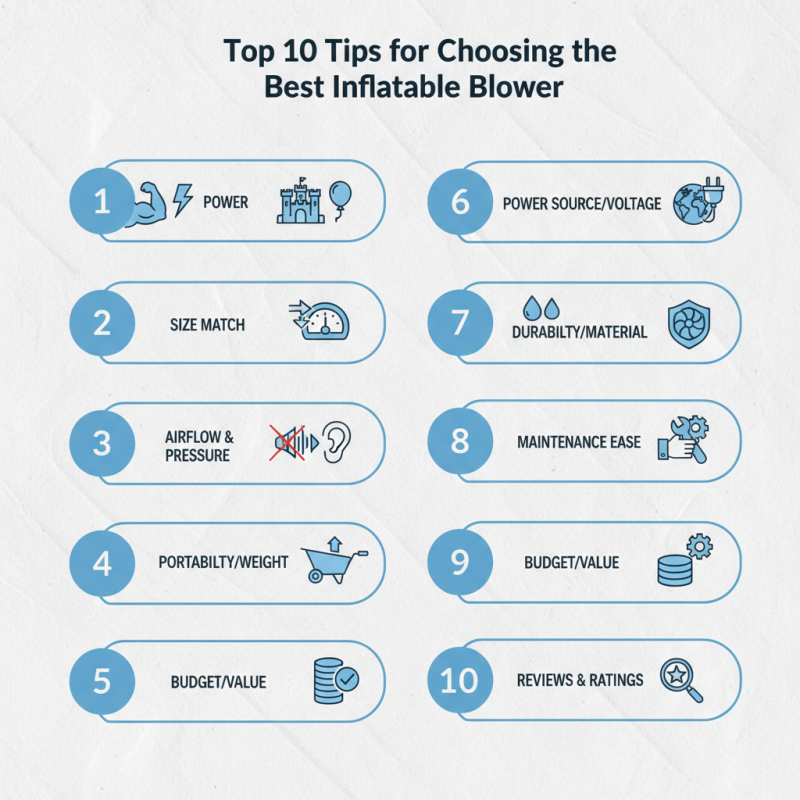
Top 10 Tips for Choosing the Best Inflatable Blower
| Tip |
Description |
Key Factor |
| 1. Power Source |
Consider whether you need an electric or gas blower based on your usage environment. |
Type of fuel |
| 2. Airflow Rate |
Evaluate the cubic feet per minute (CFM) rating to ensure efficient inflation. |
Efficiency |
| 3. Size and Weight |
Assess portability based on size and weight for ease of transport. |
Portability |
| 4. Noise Level |
Check the decibel (dB) rating for quieter operation. |
Comfort |
| 5. Durability |
Look for blowers made from high-quality materials to withstand heavy use. |
Longevity |
| 6. Safety Features |
Consider blowers with safety guards and automatic shut-off to prevent accidents. |
Safety |
| 7. Maintenance Requirements |
Evaluate how easy it is to clean and maintain the blower. |
Ease of use |
| 8. Price Range |
Determine your budget and compare prices for value. |
Affordability |
| 9. Warranty and Support |
Check the warranty period and availability of customer support. |
Security |
| 10. User Reviews |
Read user reviews to gauge performance and reliability from actual users. |
Real-world feedback |
Types of Inflatable Blowers: Which One is Right for You?
When selecting an inflatable blower, understanding the types available is crucial. There are mainly two: commercial and residential. Commercial blowers are typically larger. They offer more power and airflow. This makes them suitable for big events. However, they can be noisy and heavy. If you have limited storage space, this might pose a challenge.
Residential blowers are smaller and quieter. They are perfect for backyard parties or small gatherings. They can inflate items quickly, but may not have the same durability as commercial options. Make sure to consider your inflatable’s size. A larger inflatable might require a more robust blower.
It’s easy to overlook power ratings when making your choice. A blower with lower power might still do the job, but may not serve you well in the long run. Efficiency matters. Check the airflow measurements and ensure it aligns with your needs. Ultimately, the right blower will depend on your specific use-case. Be honest about how often and where you'll use it. This might change your choice significantly. Every detail counts.
Evaluating Power and Efficiency Ratings of Inflatable Blowers
When choosing an inflatable blower, evaluating power and efficiency is crucial. Power ratings are often measured in watts. A higher wattage typically means better performance. For instance, many blowers range from 500 to 1800 watts. Yet, a higher wattage does not always ensure efficiency. It’s vital to consider how well the power translates into airflow.
Efficiency ratings often indicate the CFM (cubic feet per minute) output. A good blower should ideally achieve between 400 and 800 CFM for optimal inflation. However, some models fall short, performing below the expected range. Review industry reports that suggest blowers with higher CFM ratings can inflate larger structures in significantly less time. A fast inflation might seem desirable, but consider the trade-off in energy consumption.
Noise levels are another important factor. Some blowers reach over 90 decibels, which can be disturbing in quiet areas. Assess if sound levels affect intended use. Balancing power, efficiency, and noise is indeed challenging. Seek feedback from users who prioritize these aspects. They can offer insights on long-term performance and potential issues. This helps to create a well-rounded perspective before making a decision.
Power and Efficiency Ratings of Inflatable Blowers
Portability and Design Features in Inflatable Blowers
When choosing an inflatable blower, portability and design features play a crucial role. A significant percentage of users prioritize lightweight designs that only weigh around 20 pounds. This makes transportation easier for events and parties. Many blowers have foldable features that enhance their portability. Yet, some models lack compact storage options, which can be a drawback.
Design features can affect functionality. A blower with a durable casing ensures longevity. However, not all blowers come with weather-resistant materials, which can lead to performance issues. Research indicates that blowers with adjustable nozzles operate more efficiently. Users find versatility in nozzle designs beneficial for various inflatable types. But some may overlook this feature, leading to suboptimal performance.
Portability also includes ease of setup. A quick inflation time is often highlighted in user reports. Blowers that take more than 3 minutes to inflate can be frustrating. This is an area where manufacturers can improve. Additionally, a power consumption rating matters. Blowers with higher wattage may offer faster inflation speeds, but they can lead to increased electricity bills over time. Balancing these factors is essential for making a wise choice.
Safety Standards and Reliability in Inflatable Blower Selection
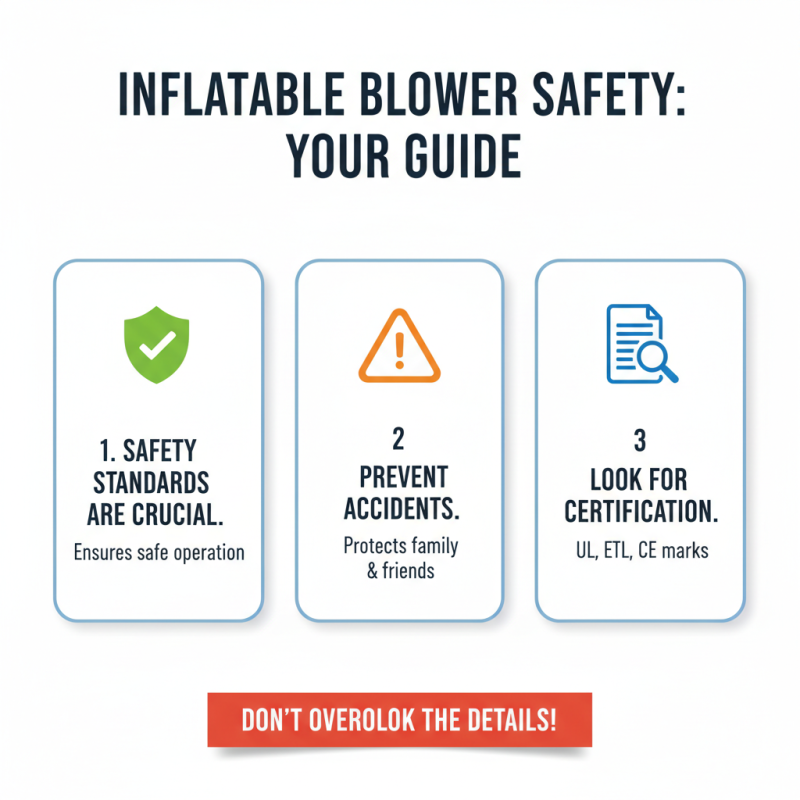
When choosing an inflatable blower, safety standards are crucial. A reliable unit should meet specific safety regulations. This helps avoid accidents during use. Look for documentation that confirms compliance with safety guidelines. These details often get overlooked. Yet, they are vital in ensuring you and your loved ones remain safe.
Additionally, the blower should have built-in safeguards. Features like thermal protection can prevent overheating. Check for quality materials; they contribute to durability. An inflatable blower might look sturdy but could fail under stress. It’s essential to evaluate the manufacturer's reputation as well. Sometimes, overconfidence in a product can lead to regret later.
Finally, ensure that the blower is easy to use. Complicated designs can create frustrations. Your blower should work well for various inflatable items. Test its noise levels; loud machines can be distracting. Remember, safety is not just about standards but also practical usability. Reflect on your choices carefully.