Top 10 Medium Pressure Fan Models for Optimal Performance?
In the realm of industrial ventilation, the significance of a reliable Medium Pressure Fan cannot be overstated. Experts, like Dr. Emily Tran, a leading authority in airflow technology, emphasize, "Choosing the right fan model directly influences operational efficiency." This insight underscores the importance of understanding various fan models and their specifications.
Medium Pressure Fans are crucial in applications requiring controlled airflow. These fans maintain optimal performance levels in manufacturing plants, warehouses, and more. Yet, with numerous options available, selecting the ideal model can be challenging. Potential users often face confusion over features and performance metrics. They may wonder which design fits best in their specific environments.
As businesses strive for efficiency, the right choice of a Medium Pressure Fan becomes vital. Factors such as energy consumption, noise levels, and maintenance must be balanced against performance needs. Although many resources offer guidance, errors in selection are common. Reflecting on industry trends reveals that the pursuit of an optimal fan model continues to evolve, driven by technology and user feedback.

Overview of Medium Pressure Fans and Their Applications
Medium pressure fans play a crucial role in various industrial applications. They are designed to handle airflow between 4 to 12 inches of water column (inWC). This range allows them to suit diverse tasks, such as cooling, ventilation, and air pollution control. Industries utilize medium pressure fans for their efficiency and reliability. According to a report by the American Society of Heating, Refrigerating, and Air-Conditioning Engineers (ASHRAE), optimized fan systems can achieve up to 30% higher efficiency compared to outdated models.
Appreciating the specific needs of each application is key in selecting the right fan. For instance, in manufacturing environments, medium pressure fans often manage high volumes of dust and particulates. Data indicates that approximately 20% of industrial energy consumption comes from fan systems. This highlights the importance of selecting fans that minimize energy use while maintaining performance. Regular maintenance is equally critical; systems that are poorly maintained can lose up to 45% efficiency.
However, choosing the optimal fan involves more than specs. Understanding airflow patterns, noise levels, and compatibility with existing systems presents its challenges. Industry feedback suggests that many users overlook the impact of fan configurations on total system performance. Reflecting on these aspects can lead to better energy savings and operational safety. Fans are vital components, yet their design and condition profoundly influence overall productivity.
Criteria for Selecting the Best Medium Pressure Fans
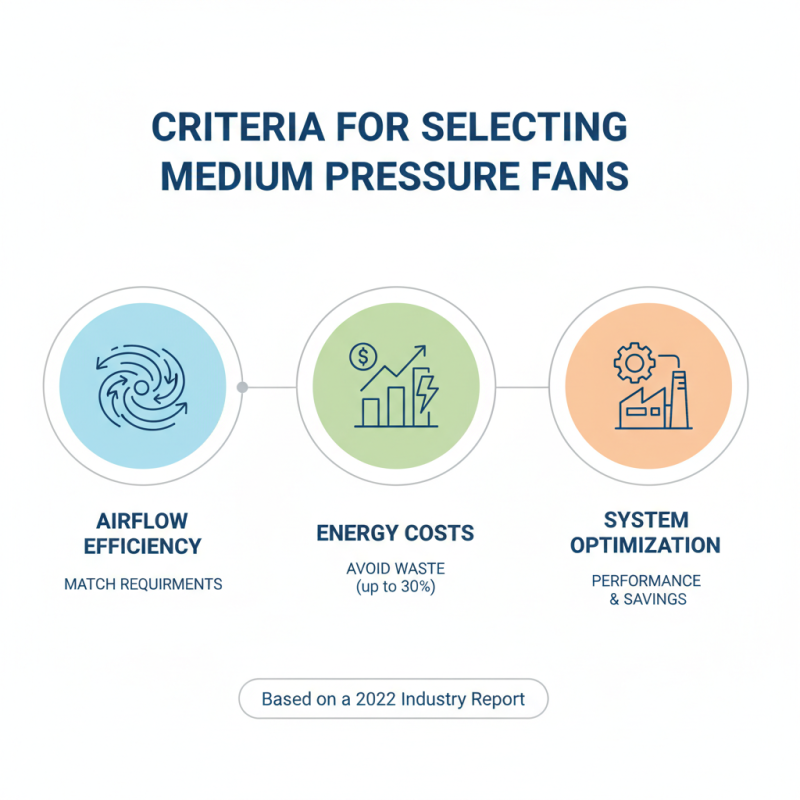
When selecting medium pressure fans, understand the key criteria for optimal performance. First, consider airflow efficiency. The fan’s airflow rate should match the specific requirements of your application. Inefficient airflow can lead to system inefficiencies and increased energy costs. A 2022 industry report indicated that improperly sized fans can waste up to 30% of energy.
Next, examine the noise level. A quieter fan can improve work environments significantly. Many medium pressure fans can produce sound levels exceeding 85 dB, which can be harmful. Opt for models with designs that minimize noise while maintaining airflow efficiency.
Durability is another factor to weigh. The materials used in the fan’s construction affect its lifespan and reliability. Fans composed of robust materials like steel or reinforced plastics can provide longer service. Regular maintenance can also extend their life, as dirt and debris accumulation can hinder performance. It's essential to find a model that balances these factors effectively to ensure sustained operational success.
Top 10 Medium Pressure Fan Models and Key Features
When selecting a medium pressure fan, understanding key features is crucial. Efficiency should come first. Fans with high efficiency ratings can reduce energy costs significantly. Look for models that offer quiet operation. This aspect is vital in environments where noise can disturb work or relaxation.
Durability matters in fan selection. Many models utilize quality materials that ensure longevity. Check the design and construction carefully. Fans with reinforced components often withstand wear and tear better than others. Compatibility with existing systems is another critical factor. Some fans integrate seamlessly, while others may require additional modifications.
Performance is essential too. It’s not just about air movement. Consider airflow rates and static pressure. Higher figures indicate better performance in challenging environments. Additionally, ease of maintenance is an area many overlook. Regular upkeep can prevent costly repairs down the line. Fans with easy access points simplify this task significantly.
Performance Comparisons Among Leading Medium Pressure Fan Models
When comparing medium pressure fans, several characteristics emerge that make certain models stand out. Efficiency is one key factor. The airflow and energy consumption should be well-balanced. A model that moves air effectively without excessive power use is indispensable for many applications. Checking the fan's static pressure capabilities is essential. This is crucial for ensuring optimal system performance.
Noise levels also play a significant role. Some fans operate quietly, allowing for a more pleasant working environment. Meanwhile, others might produce unwanted sound, which can be distracting. Additionally, durability is another point of consideration. Fans constructed with sturdy materials tend to last longer, reducing the need for frequent replacements.
However, the effectiveness of a fan is not solely determined by specifications. Installation and maintenance are equally vital. A poorly installed fan can lead to inefficiencies. Routine checks are crucial to identify any underlying issues. The industry often overlooks this aspect, focusing purely on performance metrics. Balancing these factors with hands-on experience can lead to a more comprehensive understanding of fan performance in real-world applications.
Performance Comparison of Top 10 Medium Pressure Fans
This chart illustrates the performance comparison among the top 10 medium pressure fan models based on airflow (CFM) and efficiency (W/C). The data showcases how various models meet optimal performance standards.
Maintenance Tips for Optimal Performance of Medium Pressure Fans
Maintaining medium pressure fans is essential for ensuring optimal performance. Regular inspections can extend their lifespan significantly. A study by the American Society of Heating, Refrigerating and Air-Conditioning Engineers found that proper maintenance can improve fan efficiency by up to 25%. This efficiency gain can lead to lower energy costs and enhanced operational reliability.
Cleaning is critical. Dust and debris can accumulate in both fan blades and motors. Even a minor buildup can disrupt airflow, causing the fan to work harder. Industry experts suggest a monthly cleaning schedule for high-use environments. Lubricating bearings every six months also helps prevent wear and extends the lifespan of the motors.
Monitoring vibration levels brings valuable insights. Excessive vibrations can indicate misalignment or wear. According to a report from the National Commission of Energy Efficiency, early detection of vibration issues can reduce maintenance costs by 20%. Listening for unusual sounds is crucial; they may signal deeper mechanical issues that need urgent attention. The goal is to maintain performance without waiting for noticeable failures.