Leave Your Message

How to Choose the Best Waving Surge Aerator for Your Needs?

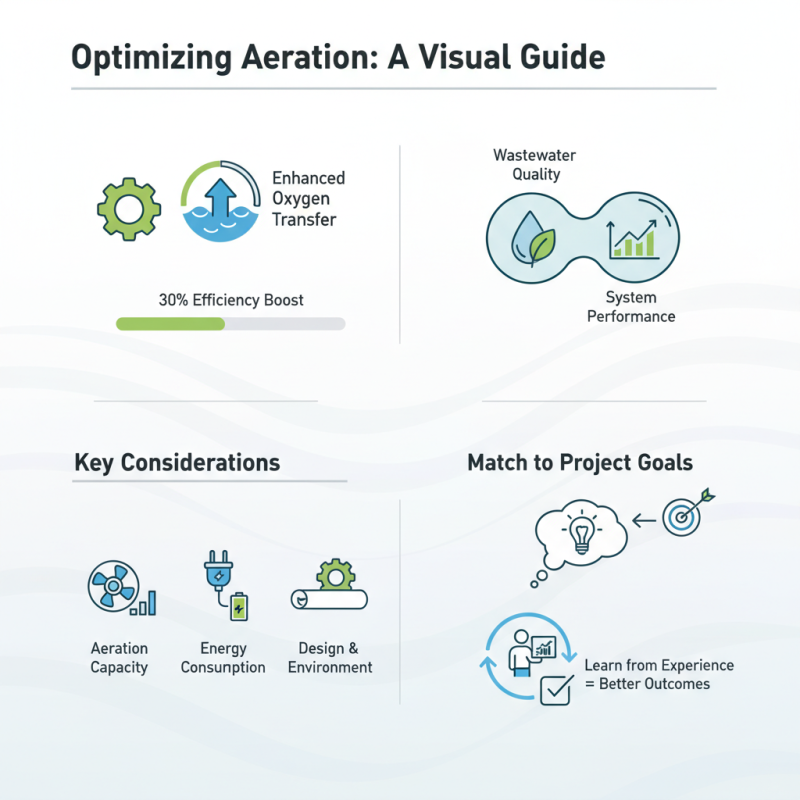
Choosing the right Waving Surge Aerator is crucial for effective aeration solutions. A recent industry report by the Water Environment Federation indicates that proper aeration can enhance oxygen transfer efficiency by up to 30%. This improvement significantly impacts the quality of wastewater treatment and overall system performance. Moreover, various applications demand different specifications.

The market offers diverse options tailored to unique needs, but not all products guarantee optimal results. Many users regret their choices due to inadequate research. A poorly selected Waving Surge Aerator can lead to inefficiencies and increased operational costs. Understanding key features like aeration capacity and energy consumption is essential.

Experts recommend considering both the design and operational environment when selecting an aerator. Effective aeration blends science with practical insights. A personal experience shared among industry professionals highlights the importance of aligning the equipment with specific project goals. Reflecting on previous mistakes can guide future decisions and lead to better outcomes.
How to Choose the Best Waving Surge Aerator for Your Needs?

Understanding the Basics of Waving Surge Aerators and Their Applications

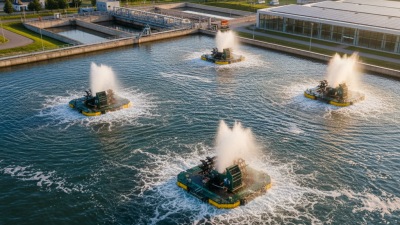
Waving surge aerators are vital in wastewater treatment. They help in oxygen transfer, reducing biochemical oxygen demand. These devices create a surface wave effect, enhancing aeration efficiency. According to the American Water Works Association, proper aeration can improve treatment efficiency by up to 30%. Choosing the right aerator requires understanding its applications and operation mechanisms.

These aerators are designed for different scales and settings. In large municipal plants, they can handle substantial volumes efficiently. In contrast, smaller systems may benefit from more compact models. A study published in the Journal of Environmental Engineering emphasized that selecting the proper aerator can lead to significant energy savings. Yet, many plants overlook the need for regular maintenance, which can diminish performance over time.

Noise and space constraints are common challenges when using these devices. High noise levels may pose issues in residential areas. Additionally, the placement of the aerator is crucial for optimal performance. Studies suggest that aerators placed near grease traps can enhance effectiveness. Finding the right balance between performance and environmental impact is essential. Attention to these details can significantly affect aeration outcomes.
Key Factors to Consider When Choosing a Waving Surge Aerator

When selecting a waving surge aerator, it’s essential to consider several key factors. Assessing the size of your installation site will help determine the best model. Large sites may require higher capacity systems, while smaller areas will benefit from compact units. The aeration depth is another critical aspect. It influences the aerator’s efficiency and effectiveness in oxygen delivery.

Efficiency ratings should not be overlooked. A more efficient aerator can lower energy costs significantly. You may find that some designs include advanced features. These features enhance oxygen transfer rates and improve overall performance. However, ensure that these added functionalities align with your specific needs. Not all environments require the latest technology.

Maintenance requirements can vary widely between models. Frequent upkeep can lead to increased operational costs. Consider the ease of access for repairs when evaluating options. It’s a common oversight during the selection process. Reflecting on these details ensures a well-informed decision, minimizing future challenges in your aeration systems.

Comparison of Key Factors for Choosing Waving Surge Aerators

Evaluating the Performance Metrics of Waving Surge Aerators

How to Choose the Best Waving Surge Aerator for Your Needs?

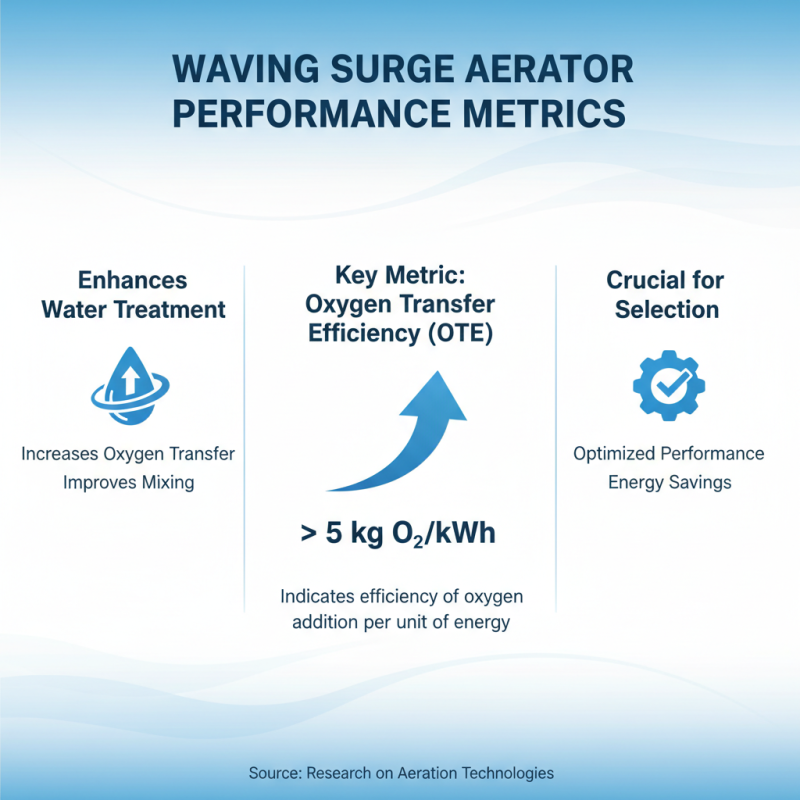
When selecting a waving surge aerator, evaluating performance metrics is crucial. These aerators help enhance water treatment efficiency by increasing oxygen transfer rates and improving mixing. Studies indicate that a well-designed aerator can achieve oxygen transfer efficiencies (OTE) exceeding 5 kg O2/kWh. This metric is essential in determining how well the aerator performs during water treatment processes.

Furthermore, power consumption is another vital performance metric. Research shows that the average power consumption for these aerators typically ranges from 0.5 to 1.5 kWh per kg of oxygen transferred. It is important to find a balance between energy efficiency and oxygen transfer capability. Notably, many aerators struggle with high-energy costs while providing adequate aeration levels. This leads to a need for continuous improvement and innovation in designs.

In addition to these metrics, the installation and maintenance requirements must also be factored in. Some aerators might be easy to install but require regular maintenance, which can incur hidden costs. Increasing understanding of these performance metrics helps operators make informed decisions. It’s evident that every choice can significantly impact overall performance and sustainability in water treatment processes.

Comparing Different Models and Brands of Waving Surge Aerators

How to Choose the Best Waving Surge Aerator for Your Needs?

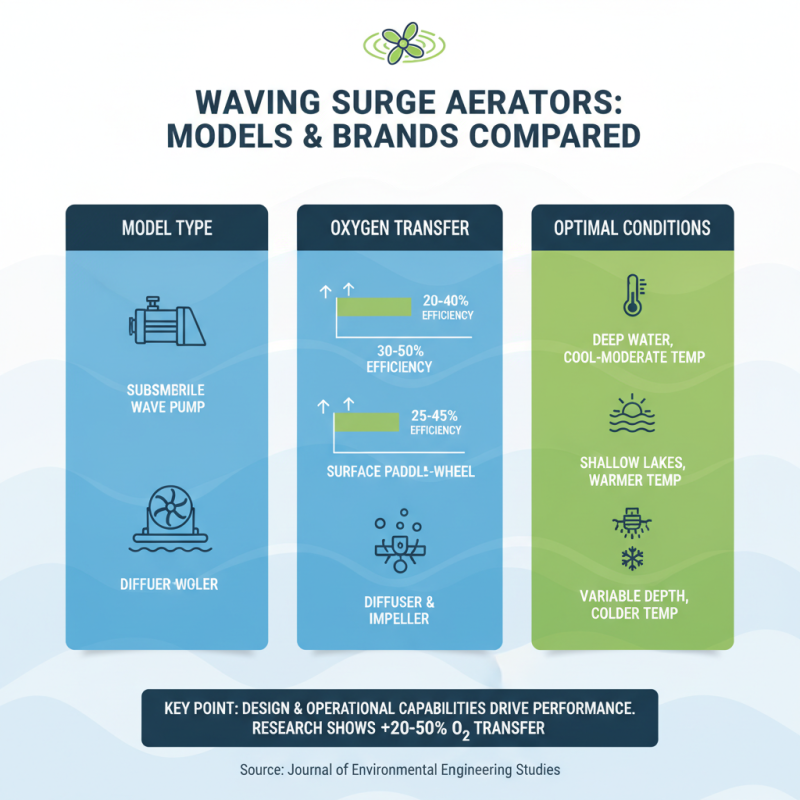
When selecting a waving surge aerator, it's vital to compare various models and brands. Numerous studies indicate that aerators can enhance oxygen transfer efficiency by 20% to 50%. The performance largely depends on their design and operational capabilities. Research published in the *Journal of Environmental Engineering* highlights that certain models are more effective at specific depths and water temperatures.

One key aspect to consider is the aeration capacity. Some aerators are optimized for large-scale applications, while others are suited for smaller systems. Data reveals that the right aerator can reduce electrical consumption by approximately 15% in wastewater treatment facilities. Reliability is crucial; even high-efficiency models may face issues like clogging or mechanical failure if not properly maintained.

Furthermore, the choice of materials plays a significant role in durability. Aerators made from corrosion-resistant materials tend to offer longer lifespans. However, the trade-off can be higher initial costs. Users often express concerns over the noise generated by some models, which can lead to complaints in residential areas. Choosing an aerator is not just about specifications; it's also about assessing real-world experiences and maintenance requirements.

Cost-Benefit Analysis: Investing in the Right Waving Surge Aerator

When considering the investment in a waving surge aerator, conducting a cost-benefit analysis is essential. This analysis helps you understand not just the initial costs, but also the long-term savings. Effective aerators enhance water quality and improve energy efficiency. These benefits can lead to significant reductions in operational costs.

Choosing the right aerator involves understanding your specific needs. Factors such as the size of the water body and its existing conditions impact effectiveness. A tailored solution often yields better results than a one-size-fits-all approach. You may find that cheaper options do not provide the desired aeration efficiency, leading to wasted resources.

Investing in a high-quality aerator requires careful consideration. Not every expensive option guarantees better performance. Reflecting on past experiences can provide valuable insights. Analyzing both the advantages and disadvantages of various choices allows for more informed decision-making. Ultimately, balancing initial costs with potential long-term benefits is key for making the right choice.

How to Choose the Best Waving Surge Aerator for Your Needs? - Cost-Benefit Analysis: Investing in the Right Waving Surge Aerator

Model Aeration Capacity (Cubic Meters/Hour) Power Consumption (kW) Estimated Lifespan (Years) Initial Cost ($) Annual Maintenance Cost ($) Cost-Benefit Ratio
Model A 500 1.5 10 1200 200 5.0
Model B 650 1.8 12 1400 220 4.8
Model C 800 2.0 15 1600 250 4.3
Model D 550 1.6 11 1300 210 5.0