How to Choose the Best High Pressure Ring Blower in 2026?
Choosing the best High Pressure Ring Blower in 2026 requires more than comparing catalog pressure ratings. The correct choice begins with the operating point: required airflow, static pressure, duty cycle, gas temperature, and installation altitude. A blower that performs well in a clean workshop may struggle beside a dusty filter or a long discharge line. Small details matter.
Rotating-equipment authority Heinz P. Bloch offers a useful principle: “Reliability begins with correct equipment selection.” That idea fits ring blower purchasing closely. Check the performance curve at the actual working pressure, not only the maximum value. Review motor efficiency, noise levels, bearing design, cooling arrangements, and service access. Confirm whether the unit supports continuous operation. Also inspect the manufacturer’s test standards and warranty conditions.
Do not overlook system resistance. A narrow pipe, blocked silencer, or undersized filter can raise pressure quickly. The blower may then run hotter than expected. That sounds simple. It is not.
A reliable evaluation should compare measured performance, lifecycle cost, maintenance requirements, and technical support. Energy consumption deserves special attention because a small efficiency gap can become expensive after thousands of operating hours. Variable-speed control may improve flexibility, although it can introduce control and cooling considerations. My own caution is this: a neat specification sheet can still hide a poor assumption. Recheck the air demand, pressure losses, and ambient conditions before approving the purchase. The best High Pressure Ring Blower is not always the largest model. It is the model that delivers stable performance without unnecessary stress.
What a High Pressure Ring Blower Is and How It Works
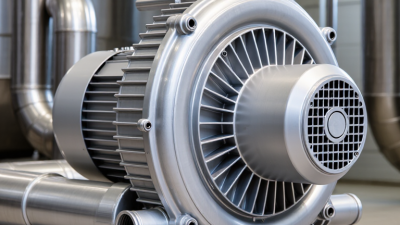
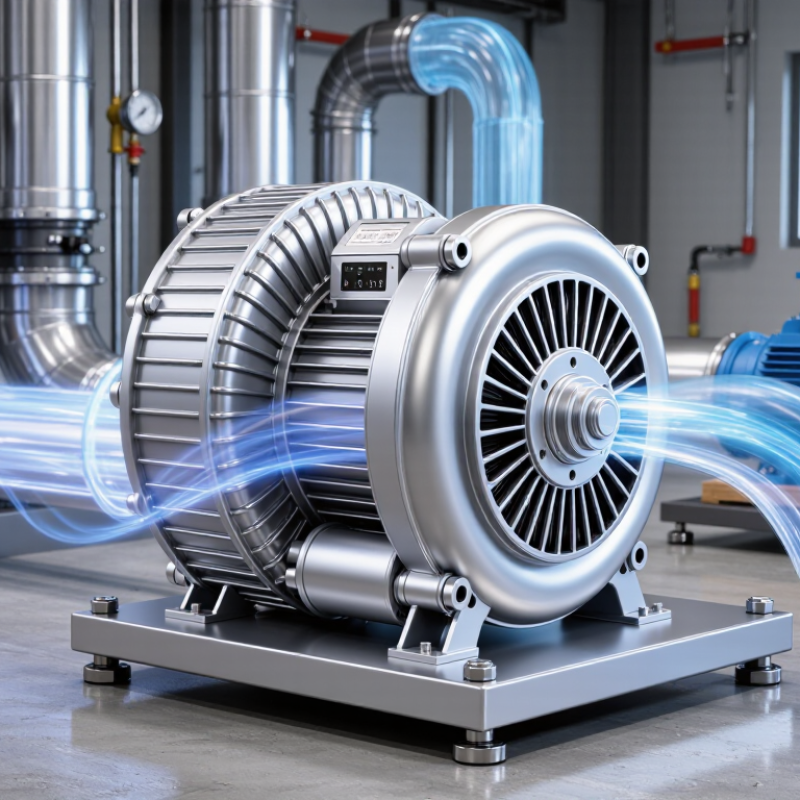
A high pressure ring blower is a dynamic air-moving machine, not a conventional piston compressor. It usually contains an impeller inside a precisely shaped ring channel. As the impeller spins, its blades accelerate air outward. The air then returns through the channel and gains energy again. This repeated circulation creates higher pressure with a steady, pulsation-free flow.
No oil is normally required. That helps keep exhaust air cleaner. The blower can support pneumatic conveying, wastewater aeration, vacuum lifting, and air knives. However, “high pressure” does not mean unlimited pressure. As resistance increases, airflow usually falls. That detail matters.
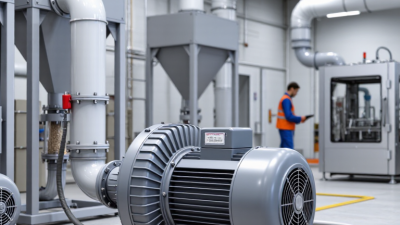
In real installations, I would inspect the inlet filter, pipe diameter, operating temperature, and required duty cycle. A clogged filter can make a capable blower perform poorly. Small pipes can also create unexpected pressure loss. During testing, measure pressure and airflow at the actual connection point, not only from the catalogue curve. Listen carefully. Unusual vibration may indicate imbalance, bearing wear, or poor mounting.
I once focused too heavily on maximum pressure. That was a mistake. A quieter, cooler unit with better airflow may serve the process more reliably. Selection should match the working point, motor protection, noise limit, altitude, and maintenance plan. Confirm these details before comparing models. Real operating data is often less impressive than a headline rating, but it is more useful.
How to Choose the Best High Pressure Ring Blower in 2026?
What a High Pressure Ring Blower Is and How It Works
A high pressure ring blower, also called a regenerative blower, uses a rotating impeller to move air repeatedly around a ring-shaped channel. This produces continuous, oil-free airflow at substantially higher pressure than a conventional fan.
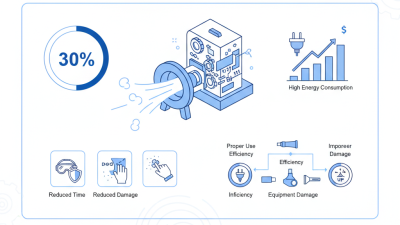
The chart shows typical pressure ranges for common applications. Select a blower by matching the required pressure and airflow, then allow additional capacity for filter resistance, pipe losses, altitude, temperature, and future system expansion. Actual performance varies by impeller design, motor power, operating frequency, and system conditions.
Key Performance Specifications to Compare Before Buying
Choosing a high pressure ring blower starts with measured performance, not catalogue adjectives. Compare pressure, airflow, power input, and operating point together. A blower delivering 250 mbar at 180 m³/h may consume more electricity than expected near its pressure limit. That difference appears on the utility bill.
Check whether the performance curve uses inlet conditions, outlet pressure, and air temperature that match your site. ISO 1217 and AMCA Publication 210 provide recognized methods for testing airflow and pressure. Ask for test tolerances, not just a single impressive number. U.S. Department of Energy guidance reports that compressed-air leaks can waste 20–30% of system output in poorly maintained installations. A ring blower cannot compensate for leaking hoses or undersized piping.
Motor efficiency matters, but absorbed power matters more. Calculate watts per cubic metre per hour at your actual duty point. Review noise, vibration, maximum temperature, insulation class, and continuous-duty rating. For dusty air, confirm filtration pressure loss and service intervals. Small filters can become expensive restrictions. I have seen selections fail because engineers compared peak flow only. That shortcut looks efficient on paper. It often is not. Check starting current, control compatibility, and whether the pressure reserve remains adequate after filter loading. Request independent test records where possible, then compare total energy use over one operating year.
How to Match Blower Pressure and Airflow to Your Application
How to Choose the Best High Pressure Ring Blower in 2026?
How to Match Blower Pressure and Airflow to Your Application
Choosing a high pressure ring blower starts with the application’s real operating point. Pressure and airflow must be measured together, not selected separately. A blower may provide strong airflow at low resistance, then drop sharply when ductwork, filters, or nozzles restrict the system. Check the fan curve and locate the point where required pressure meets required airflow. That point matters most.
In field checks, I have found that small leaks can distort performance readings. Measure pressure near the equipment inlet, and measure airflow after installation. Include filter loading, pipe length, bends, altitude, and operating temperature. For example, a conveying system may need stable pressure more than maximum airflow. An aeration tank may require continuous airflow with lower pressure variation. Oversizing seems safe, but it can increase noise, energy use, and valve stress. Bigger is not always better.
Tips: Add a modest operating margin, usually based on tested system losses rather than guesswork. Confirm whether pressure is stated as static or total pressure. Review the duty cycle before choosing a motor. Keep filters accessible for cleaning. A pressure gauge and airflow meter can reveal problems early. Do not ignore sound levels in occupied areas. The first estimate may be wrong, and that is normal. Recheck the system after commissioning, because actual resistance often differs from the design drawing.
How to Choose the Best High Pressure Ring Blower in 2026? - How to Match Blower Pressure and Airflow to Your Application
| Application |
Typical Airflow
(m³/h) |
Required Pressure
(mbar) |
Required Pressure
(kPa) |
Recommended Blower Arrangement |
Selection Guidance |
| Small vacuum lifting equipment |
80–180 |
150–250 |
15–25 |
Single-stage or compact two-stage unit |
Allow for leakage around porous or irregular loads; verify the vacuum curve at the expected operating point. |
| Packaging and carton handling |
150–350 |
180–300 |
18–30 |
Single-stage unit for low leakage; two-stage unit for higher vacuum |
Select sufficient airflow to maintain grip if cartons are porous or partially covered. |
| Aeration of small wastewater tanks |
100–500 |
120–250 |
12–25 |
Single-stage pressure blower |
Calculate diffuser submergence pressure, pipe losses, and diffuser resistance before choosing airflow capacity. |
| Fish-farm and pond aeration |
200–800 |
150–350 |
15–35 |
Single-stage or two-stage unit, depending on depth |
Pressure increases with water depth; include diffuser fouling and seasonal water-level allowance. |
| Pneumatic conveying of light materials |
250–900 |
250–500 |
25–50 |
Two-stage or three-stage pressure blower |
Account for pipe length, bends, filters, material loading, and required conveying velocity. |
| Air knives and drying lines |
300–1,200 |
100–300 |
10–30 |
High-flow single-stage unit or parallel blowers |
Airflow and nozzle geometry usually matter more than maximum pressure; minimize duct restrictions. |
| Textile web and sheet handling |
250–900 |
100–250 |
10–25 |
High-flow blower with adjustable control |
Use a pressure regulator, bypass valve, or variable-speed drive when the web tension must be controlled. |
| Industrial vacuum cleaning systems |
200–700 |
250–500 |
25–50 |
Two-stage or three-stage vacuum blower |
Choose a model that maintains airflow as filters load; include a filter differential-pressure limit. |
| Central vacuum lifting tables |
300–1,000 |
250–450 |
25–45 |
Two-stage vacuum blower or multiple units in parallel |
Size for the largest expected leakage area and the required lifting response time. |
| Gas boosting and air circulation |
100–600 |
100–300 |
10–30 |
Application-specific pressure blower |
Confirm gas compatibility, temperature, hazardous-area requirements, and sealing materials before selection. |
Pressure and Airflow Matching Reference
| Design Parameter |
Practical Rule |
Typical Engineering Value |
Why It Matters |
| Pressure safety margin |
Select operating pressure below the blower's maximum rated pressure. |
10–20% margin for stable systems |
A continuously overloaded blower can overheat, reduce service life, and consume more energy. |
| Airflow margin |
Choose capacity above the calculated process demand, not only the free-air rating. |
10–15% for known systems; up to 20% for uncertain leakage |
Actual airflow falls as system resistance and pressure increase. |
| Pipe and hose pressure loss |
Add losses from straight pipe, elbows, filters, valves, and diffusers. |
Often 10–30% of total system pressure |
Undersized piping can make a correctly selected blower perform poorly. |
| Water-column pressure |
For submerged aeration, estimate approximately 100 mbar per metre of water depth. |
1 m water depth ≈ 98 mbar |
Water depth establishes a substantial part of the required discharge pressure. |
| Unit conversion |
Use consistent pressure units when comparing performance curves. |
1 kPa = 10 mbar; 1 mbar = 100 Pa |
Mixing Pa, kPa, mbar, and inH₂O can lead to major sizing errors. |
| Electrical supply |
Verify voltage, frequency, phase, starting current, and motor protection. |
Common industrial supplies include 230 V or 400 V, 50/60 Hz |
Incorrect electrical specifications can prevent startup or cause motor damage. |
| Operating environment |
Check ambient temperature, altitude, dust, moisture, and installation ventilation. |
Derating may be required above approximately 40°C ambient temperature |
Heat and contamination affect motor cooling, insulation life, and blower performance. |
Engineering note: The ranges above are general application-planning values rather than a substitute for a manufacturer's performance curve. Final selection should be based on the required operating point, calculated system resistance, gas temperature, installation conditions, motor power, and applicable safety requirements.
Motor, Material, Efficiency, and Noise Considerations
Choosing the best high-pressure ring blower in 2026 starts with the motor. The International Energy Agency reports that motor-driven systems consume about half of global electricity. A small efficiency loss can become expensive after thousands of operating hours. Select a motor with a verified IEC 60034-30-1 efficiency class, not only an attractive efficiency label. Check rated load, starting current, duty cycle, and compatibility with variable-speed control. Oversizing remains a common mistake.
Material selection should match the air and environment. Aluminum housings reduce weight and resist ordinary corrosion, while coated steel may suit harsher industrial areas. For dusty air, inspect impeller clearance and sealing details carefully. The U.S. Department of Energy’s Improving Fan System Performance sourcebook notes that fan systems can consume 15–20% of industrial facility electricity. Therefore, pressure and airflow measurements matter more than catalog claims. Measure them at the actual operating point.
Noise deserves practical testing. ISO 3744 provides methods for determining sound power levels, but installation can change the final result. A blower beside a thin metal wall may sound much louder than laboratory data suggests. Look for published dB(A) values, vibration limits, and maintenance access. Keep it quiet. My own selection process is not perfect: I once prioritized peak pressure and underestimated heat buildup. That experience changed my checklist. Efficiency, material durability, and noise must be judged together, under real operating conditions.