10 Essential Tips for Choosing the Right Centrifugal Blower?
Choosing the right centrifugal blower can be a daunting task. With numerous options available in the market, it's essential to consider various factors. According to a report by the Global Blower Association, the centrifugal blower market is expected to grow by 7% annually. This highlights the increasing demand for efficient air movement solutions.
Expert James T. Harris, a leading authority in the blower industry, states, “Selecting the right centrifugal blower is crucial for optimal performance.” His insights remind us that a poorly chosen blower can lead to energy inefficiencies and higher operational costs.
Each application has unique requirements. Factors such as airflow needs, pressure specifications, and energy consumption must be evaluated carefully. Faulty choices can result in system failures, impacting productivity. Hence, understanding the functional design and operational parameters of centrifugal blowers is vital. Consideration of these aspects will guide users toward making informed decisions for their specific needs.

Understanding the Basics of Centrifugal Blowers
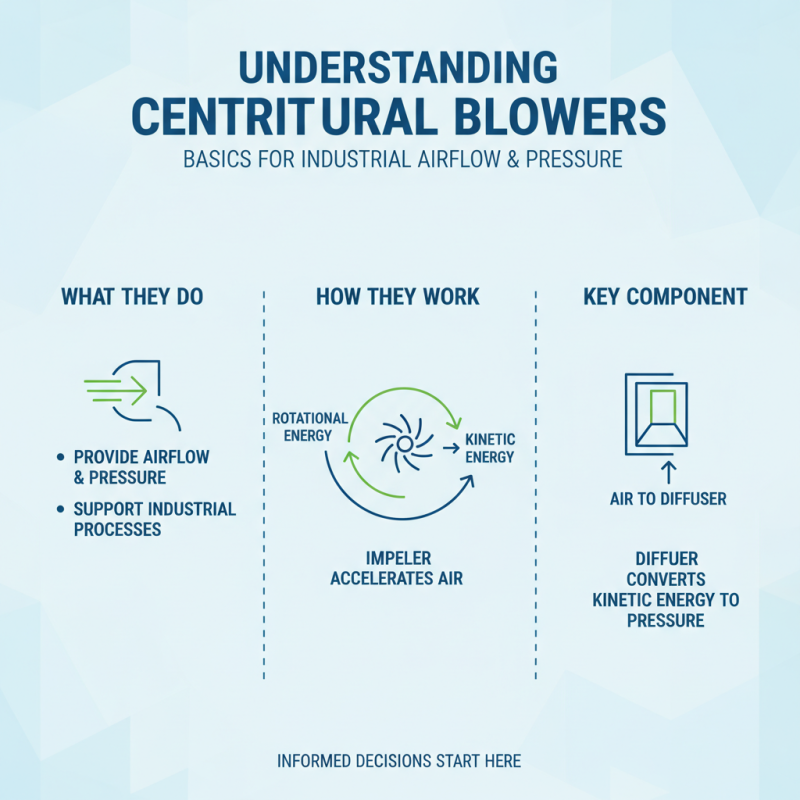
Centrifugal blowers are vital in various industries. They provide airflow and pressure to support processes. Understanding their basics can help in making informed decisions. These devices operate by converting rotational energy into kinetic energy. They achieve this through an impeller, which accelerates the air and directs it through a diffuser.
Choosing the right centrifugal blower involves considering specific performance metrics. Key factors include flow rate, pressure, and efficiency. It's vital to assess the application's demands. For instance, dust collection systems may need different specifications compared to ventilation systems. Each application can highlight unique requirements.
However, buyers must reflect on potential inefficiencies. A blower might meet one requirement but fail in another. Not all models are versatile. Prioritizing features that align with your needs is crucial. Balancing performance with costs can also be a challenge. Ultimately, awareness of these details can lead to better choices.
Key Specifications to Consider for Optimal Performance
When selecting a centrifugal blower, key specifications are crucial for ensuring optimal performance.
One of the most important factors is airflow capacity.
Proper airflow is essential for effective material handling. According to industry reports, units with a capacity of
1,000 to 10,000 CFM are widely used in various applications. A unit with insufficient airflow
can lead to inefficiencies and operational challenges.
Another vital specification is the static pressure rating. This measures how effectively the blower can
overcome resistance in the system. A blower with a high static pressure rating can improve the system's overall efficiency. Reports suggest
selecting a blower that matches the system's resistance characteristics. Otherwise, your blower may struggle, leading to premature wear or failure.
Noise levels are also a significant consideration. Many operations require sound levels below
85 dBA to comply with safety regulations. Choosing a blower with noise attenuation features
can ensure compliance while maintaining performance. However, the trade-off between noise and performance is often overlooked.
Finding the right balance is crucial for both operational efficiency and worker safety. Ignoring these specifications can lead to costly mistakes.
Evaluating Noise Levels and Energy Efficiency
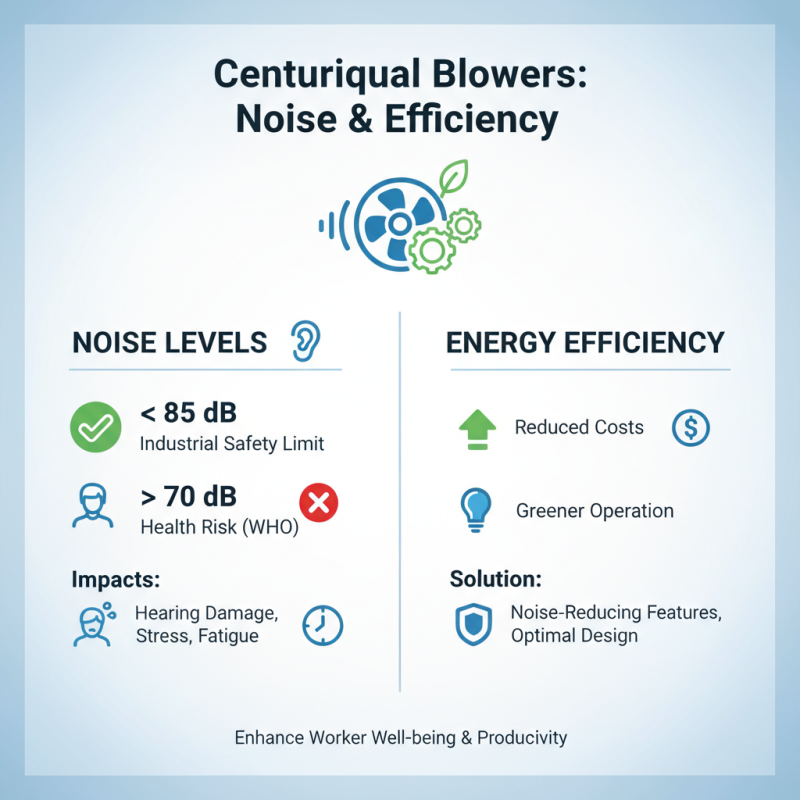
When selecting a centrifugal blower, evaluating noise levels and energy efficiency is paramount. The optimal sound level for an industrial setting should typically be below 85 dB. Exposure to higher levels over time can lead to hearing damage for workers. According to the World Health Organization, sustained noise exposure above 70 dB can cause adverse effects on health, including stress and fatigue. Choosing a blower with noise-reducing features can significantly enhance the working environment.
Energy efficiency is another critical factor. Blowers account for a significant portion of energy consumption in many industrial applications. Data from the U.S. Department of Energy suggests that optimizing blower efficiency can reduce energy usage by up to 30%. Look for models with high-efficiency motors, as they can improve energy consumption significantly. Moreover, variable frequency drives (VFDs) can adjust speed and output based on demand, further enhancing energy savings.
Despite advancements, many users overlook the importance of regular maintenance to preserve noise levels and efficiency. Installing sound enclosures can help mitigate noise further, yet they require proper placement and ventilation. Balancing these factors demands careful consideration and ongoing evaluation to ensure effective operation and compliance with industry standards.
Assessing Installation and Maintenance Requirements
When selecting a centrifugal blower, assessing installation and maintenance requirements is crucial. A good installation process ensures optimal performance and longevity. Check the space available for installation. Is it sufficient? Consider the orientation. Blowers can be mounted vertically or horizontally. Each has its challenges, and improper installation can lead to inefficiencies. Ensure that the blower is accessible for maintenance. Space constraints can make routine checks difficult.
Monitor noise levels during operation. High noise can indicate problems. Familiarize yourself with the maintenance schedule. Regular inspections prevent costly repairs. Lubrication of bearings is essential to keep the blower running smoothly. Pay attention to potential vibrations during operation. These can signal misalignment or imbalance. It's vital to understand the system’s compatibility with existing infrastructure to avoid operational downtime and unexpected costs. Adhering to installation and maintenance guidelines will enhance performance and durability of the blower significantly.
10 Essential Tips for Choosing the Right Centrifugal Blower
Comparing Different Brands and Models on the Market
When comparing different brands and models of centrifugal blowers, several factors need careful consideration. The industry has seen a remarkable demand growth, with the market projected to reach USD 7 billion by 2026. This reflects an increasing need for efficient air movement in various applications. However, not all blowers are the same. Each brand often emphasizes unique features that may resonate with specific industrial requirements.
A recent report from a leading industry analyst highlighted that energy efficiency remains a critical factor when selecting a blower. Models boasting high energy efficiency can reduce operational costs significantly over time. For instance, some blowers offer efficiencies exceeding 85%. Yet, many manufacturers may not always provide accurate efficiency ratings. Users must independently verify these claims.
Durability and maintenance requirements also vary widely among models. Some brands require more frequent maintenance, leading to higher long-term costs. Regular inspections and parts replacements are essential for optimal performance. Users should analyze the service intervals recommended by manufacturers. This information can be difficult to navigate, resulting in potential pitfalls for those uninformed. Balancing features, efficiency, and maintenance can ensure the right choice for specific operational needs.