Leave Your Message
Choosing the right High Pressure Regenerative Blower is rarely a simple catalog decision. Pressure demand, airflow stability, duty cycle, noise, and operating temperature all influence performance. A blower may look powerful on paper, yet underperform when filters become dirty or pipelines become restrictive.
Rotating-equipment authority Heinz P. Bloch has emphasized, “Reliability is designed in, not inspected in.” This principle matters here. A dependable manufacturer should explain its impeller design, motor efficiency, sealing method, cooling arrangement, and testing process. It should also provide practical data at different pressures, not only an attractive maximum rating.
Real applications reveal the differences. In wastewater aeration, steady air delivery supports biological treatment. In pneumatic conveying, pressure must remain stable through long pipe runs. Vacuum lifting, packaging, and medical equipment demand quieter operation and predictable control. Small details matter. Bearing temperature matters. So does service access.
This guide examines ten leading High Pressure Regenerative Blower manufacturers and compares their engineering strengths, product ranges, customization options, and after-sales support. The ranking is not absolute. A compact blower may suit a laboratory, while a robust industrial unit fits a cement plant better. That distinction deserves attention.
Some published specifications can also be difficult to compare. Testing conditions vary. Marketing language can blur important limits. Readers should verify airflow, pressure, altitude, voltage, sound level, and continuous-duty ratings before purchasing. The best choice is not always the largest model. It is the unit that delivers stable performance, reasonable energy use, and maintainable operation over time.

Understanding High Pressure Regenerative Blowers and Their Operating Principles
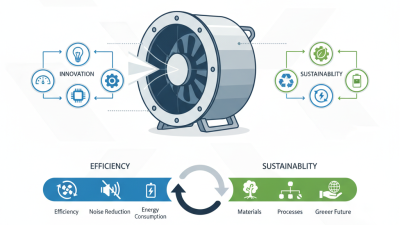
High-pressure regenerative blowers move air with a fast, non-contact impeller inside a close annular channel. As the impeller spins, small air volumes accelerate outward, return through the channel, and gain energy repeatedly. This recirculation creates pressure without oil in the air path. The result is clean airflow, modest maintenance, and almost no rubbing wear. However, “high pressure” is not a universal rating. Actual performance depends on flow, inlet temperature, altitude, and system resistance.
A motor supplies rotational energy, while the impeller converts it into velocity and pressure. Single-stage units suit moderate-pressure duties; multiple stages usually raise pressure but increase heat and power demand. Installers should read the complete performance curve, not only the maximum pressure figure. That figure can be misleading. A blocked filter or undersized pipe may push the blower away from its efficient operating point. Testing at the real duty point remains essential, even when catalog values look impressive.
The U.S. Department of Energy’s Improving Compressed Air System Performance guide reports that compressed-air systems can represent about 10% of industrial electricity use. It also notes that leaks may waste 20–30% of compressor output. Energy waste often starts outside the blower. Poor sealing, unnecessary pressure, and dirty filters quietly raise operating costs. A practical selection includes a measured duty point, thermal limits, noise requirements, and service access. Some specifications still appear too optimistic; field verification is wiser.
Comparative technical data for common high-pressure regenerative blower configurations. Values are representative industry ranges and should be verified against the manufacturer’s certified performance curve for the selected model.
| Rank | Generic Manufacturer Profile | Typical Blower Configuration | Operating Principle | Typical Maximum Pressure | Typical Maximum Vacuum | Typical Airflow Range | Common Motor Range | Typical Efficiency Level | Suitable Applications | Key Selection Consideration |
|---|---|---|---|---|---|---|---|---|---|---|
| 1 | Profile 01 High-pressure specialist |
Single-stage, side-channel blower | A high-speed impeller transfers kinetic energy to the air in a toroidal side channel, creating continuous pressure or vacuum. | Up to approximately 500 mbar | Down to approximately −450 mbar | 50–1,200 m³/h | 0.25–7.5 kW | Moderate | Air conveying, packaging, wastewater aeration, and pneumatic lifting | Best for moderate flow with relatively high pressure in a compact package. |
| 2 | Profile 02 Two-stage specialist |
Two-stage side-channel blower | Two impeller stages connected in series increase pressure capability while maintaining oil-free operation. | Up to approximately 700 mbar | Down to approximately −600 mbar | 80–1,000 m³/h | 0.75–15 kW | Moderate | Central vacuum systems, aeration, filtration, and material handling | Useful where higher pressure is required without using a lubricated compressor. |
| 3 | Profile 03 Three-stage specialist |
Three-stage side-channel blower | Multiple impeller stages raise the pressure ratio; each stage adds energy with no internal contact between rotating parts. | Up to approximately 900 mbar | Down to approximately −700 mbar | 60–700 m³/h | 1.5–18.5 kW | Moderate to low | Deep vacuum handling, dense-phase conveying, and industrial drying | Higher pressure comes with increased power consumption and heat generation. |
| 4 | Profile 04 High-flow supplier |
Single-stage, large-diameter impeller | Large impeller channels move a high volume of air at comparatively low to medium differential pressure. | Up to approximately 300 mbar | Down to approximately −250 mbar | 500–3,000 m³/h | 2.2–30 kW | Moderate | Large aeration basins, air knives, cooling, and general ventilation | Prioritize airflow, inlet filtration, and motor cooling when selecting this configuration. |
| 5 | Profile 05 Compact equipment supplier |
Compact single-stage blower | A small high-speed impeller produces oil-free air through regenerative recirculation within the side channel. | Up to approximately 250 mbar | Down to approximately −200 mbar | 20–400 m³/h | 0.12–3 kW | Moderate | Small vacuum lifters, printing equipment, laboratory systems, and packaging machines | Check noise level, ambient temperature, and available installation space. |
| 6 | Profile 06 Heavy-duty supplier |
Industrial two-stage blower with reinforced housing | Series-connected stages provide higher pressure, while robust bearings and housing support continuous industrial duty. | Up to approximately 800 mbar | Down to approximately −650 mbar | 150–1,500 m³/h | 1.5–22 kW | Moderate | Continuous-duty conveying, wastewater treatment, and process-air systems | Confirm duty cycle, bearing life, thermal protection, and service accessibility. |
| 7 | Profile 07 Low-noise supplier |
Acoustically optimized regenerative blower | The regenerative compression process is combined with improved impeller geometry, acoustic covers, and vibration control. | Up to approximately 450 mbar | Down to approximately −400 mbar | 80–900 m³/h | 0.37–11 kW | Moderate | Indoor installations, medical support equipment, electronics production, and laboratories | Compare sound-pressure measurements at the same operating point and installation condition. |
| 8 | Profile 08 Energy-conscious supplier |
Variable-speed regenerative blower package | An inverter adjusts motor speed to match changing airflow demand, reducing throttling losses during partial-load operation. | Up to approximately 600 mbar | Down to approximately −500 mbar | 100–1,500 m³/h | 0.75–22 kW | Moderate to high at variable load | Demand-controlled aeration, automated conveying, and multi-shift process systems | Evaluate the complete system, including inverter efficiency, control range, and motor compatibility. |
| 9 | Profile 09 Harsh-environment supplier |
Sealed or protected regenerative blower | Oil-free regenerative compression is combined with corrosion-resistant materials, sealed electrical components, and protective coatings. | Up to approximately 650 mbar | Down to approximately −550 mbar | 100–1,200 m³/h | 0.75–18.5 kW | Moderate | Humid wastewater plants, outdoor equipment, chemical handling, and dusty process areas | Verify enclosure rating, gas compatibility, filtration requirements, and corrosion resistance. |
| 10 | Profile 10 Customized-system supplier |
Engineered multi-blower system | Parallel blowers increase airflow, while series arrangements increase pressure; control logic balances capacity and redundancy. | System-dependent; commonly 300–900 mbar | System-dependent; commonly −250 to −700 mbar | 500–6,000 m³/h | 5.5–90 kW total installed power | Depends on system design | Large industrial plants, centralized aeration, conveying networks, and critical processes | Assess redundancy, control strategy, pressure losses, maintenance access, and lifecycle cost. |