Choosing the right Ring Type Air Blower is rarely a simple matter of comparing motor power or catalogue price. Global buyers face different voltage systems, ambient temperatures, noise rules, duty cycles, and service expectations. A blower working beside a wastewater aeration tank may need continuous operation, while a packaging line may require cleaner, quieter air. Small details matter.
The U.S. Department of Energy’s Improving Compressed Air System Performance sourcebook notes that compressed-air systems can consume a significant share of industrial electricity, commonly around 10% to 15%, although actual results vary by facility. This makes efficiency, leakage control, pressure stability, and correct sizing essential purchasing factors. ISO 1217 provides recognized methods for testing displacement compressor performance, while ISO 8573 helps buyers define compressed-air quality requirements. These references support a more reliable comparison than advertising claims alone.
This guide examines ten Ring Type Air Blower types used across industrial and commercial applications. Each type is considered through airflow range, pressure capability, motor efficiency, operating sound, maintenance access, installation conditions, and supplier support. The ranking is practical, not absolute. A high-efficiency model may disappoint if its pressure curve does not match the process. A low-cost unit may become expensive after years of heat, vibration, and bearing replacement. That limitation matters. Buyers should verify test conditions, warranty terms, spare-parts availability, and local technical support before ordering. Manufacturer data can also be incomplete. Independent checks remain valuable.
Ring type air blowers are compact machines that move air through a circular flow channel. They create pressure or vacuum without oil inside the air path. Most units use a motor, impeller, housing, inlet, outlet, and protective filter. The impeller usually contains many curved blades. These blades guide air around the ring-shaped chamber.
The operating principle is straightforward. Air enters near the impeller center and gains speed from the rotating blades. It then travels through the side channel, where repeated acceleration increases pressure. A second-stage design can provide higher pressure or deeper vacuum than a single-stage unit. Airflow remains smooth, but sound levels can rise without proper silencers. Heat also builds during continuous operation.
In practical installations, technicians check airflow, pressure, vacuum, ambient temperature, altitude, and dust levels. A filter may look like a small detail, yet a blocked filter can reduce performance quickly. Voltage and frequency must match the local electrical supply. One common mistake is choosing a blower by motor power alone. That approach can waste energy or produce insufficient airflow. I have found that real operating conditions often challenge the initial calculation. Therefore, performance curves and measured system resistance deserve careful review. Not every ring blower suits every process.
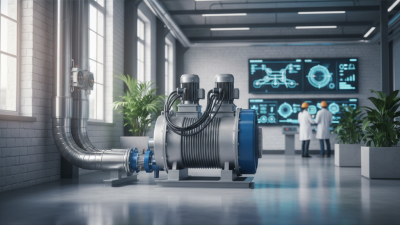
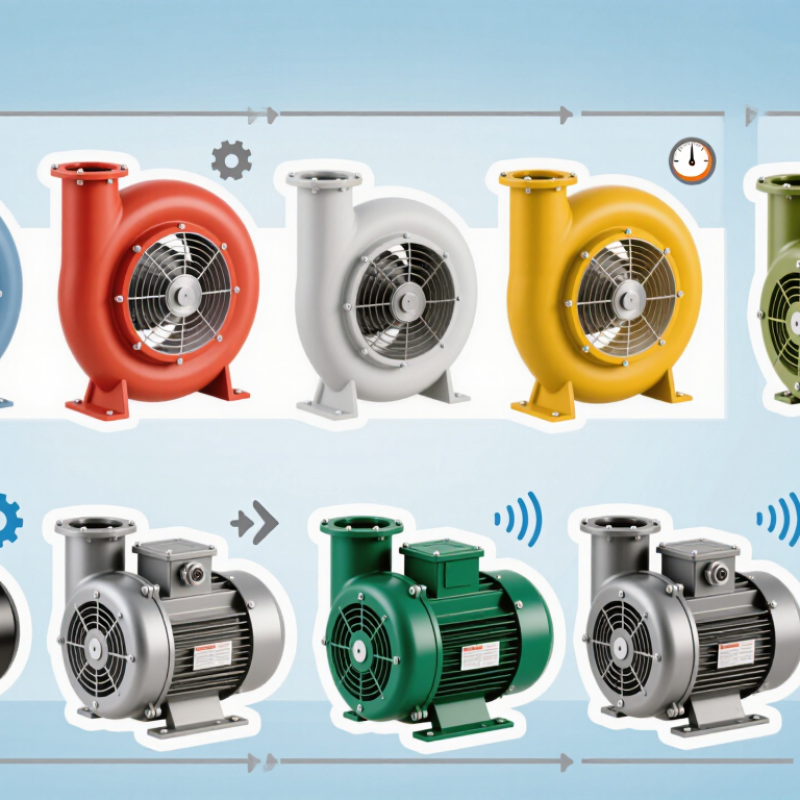
Ring type air blowers are not one universal machine. Their configuration decides pressure, vacuum depth, airflow stability, noise, and service life. The ten common arrangements include single-stage pressure, single-stage vacuum, two-stage pressure, two-stage vacuum, three-stage pressure, three-stage vacuum, parallel units, series units, variable-speed control, and duty-standby systems.
Single-stage models suit aeration, packaging, and light pneumatic conveying. Two-stage designs provide stronger pressure or vacuum, but they usually generate more heat. Three-stage units reach higher differential pressure with reduced flow. Series operation adds pressure. Parallel operation increases airflow. Variable-speed control can reduce throttling losses when demand changes. Duty-standby arrangements protect continuous processes, although they require more floor space and control planning. Small details matter.
The U.S. Department of Energy’s Motor Systems Market Assessment reports that motor-driven systems consume about 46% of global electricity. Its compressed-air guidance also notes that compressed air may use 10–15% of a plant’s electricity, with inefficient sites reaching roughly 30%. That makes configuration selection an energy decision, not merely a purchasing decision. Buyers should compare operating points, inlet filtration, ambient temperature, seal design, and measured noise. A catalog rating alone is insufficient. I have seen projects choose the highest-pressure model, then waste energy through excess pressure. Also, “three-stage” does not always mean better; actual duty cycles can change the answer.
| No. | Ring Blower Configuration | Typical Operating Mode | Typical Airflow Range | Typical Maximum Pressure | Typical Maximum Vacuum | Common Applications | Key Selection Consideration |
|---|---|---|---|---|---|---|---|
| 1 | Single-Stage Side-Channel Blower | Continuous low-pressure air delivery or vacuum service | 50–1,200 m³/h | 100–250 mbar | −80 to −180 mbar | Air conveying, cooling, light-duty aeration, packaging equipment | Best suited to high flow with moderate pressure or vacuum requirements |
| 2 | Two-Stage Side-Channel Blower | Higher-pressure or deeper-vacuum operation than a single-stage unit | 40–900 m³/h | 200–500 mbar | −150 to −300 mbar | Wastewater aeration, vacuum lifting, textile machinery, paper handling | Provides a useful balance between pressure, airflow, and energy consumption |
| 3 | Three-Stage Side-Channel Blower | High-pressure air supply or deep-vacuum service | 30–700 m³/h | 350–650 mbar | −250 to −450 mbar | Vacuum clamping, pneumatic conveying, water treatment, printing machinery | Use when system resistance is high and airflow demand is moderate |
| 4 | Multi-Stage Side-Channel Blower | Several impeller stages arranged in series for elevated differential pressure | 20–500 m³/h | 500–1,000 mbar | −400 to −600 mbar | Industrial vacuum systems, dense-phase conveying, flotation, lifting systems | Confirm motor power, thermal limits, and required operating point before selection |
| 5 | Pressure-Optimized Ring Blower | Designed primarily for positive-pressure air delivery | 50–1,000 m³/h | 250–800 mbar | Not normally the primary duty | Aeration tanks, air knives, bubbling systems, combustion-air assistance | Select according to required pressure at the actual airflow, not free-air capacity |
| 6 | Vacuum-Optimized Ring Blower | Designed primarily for suction and negative-pressure applications | 30–800 m³/h | Limited positive pressure capability | −150 to −600 mbar | Vacuum tables, material lifting, suction conveyors, packaging and handling systems | Allow for filter losses and leakage because both directly reduce achievable vacuum |
| 7 | Direct-Drive Ring Blower | Motor shaft directly drives the impeller without belts or couplings | 20–1,500 m³/h | 100–800 mbar | −80 to −600 mbar | General industrial equipment, compact skids, continuous-duty air systems | Offers compact construction and low routine transmission maintenance |
| 8 | Belt-Drive Ring Blower | Separate motor and blower connected by a belt transmission | 100–2,000 m³/h | 100–700 mbar | −80 to −500 mbar | Large air-handling packages, process ventilation, centralized conveying systems | Allows flexible speed selection but requires belt inspection and alignment |
| 9 | Three-Phase Industrial Ring Blower | Continuous-duty operation on industrial electrical networks | 100–2,000 m³/h | 150–1,000 mbar | −100 to −600 mbar | Factories, wastewater plants, pneumatic transport, process automation | Check voltage, frequency, starting current, enclosure rating, and local electrical standards |
| 10 | Explosion-Protection-Ready Ring Blower | Configured for hazardous-area projects when the complete assembly is suitably certified | 20–1,000 m³/h | 100–800 mbar | −80 to −500 mbar | Chemical processing, solvent handling, dust-risk areas, gas-transfer systems | Verify the applicable hazardous-area classification, motor certification, temperature class, and installation rules |
Ring type air blowers differ mainly in pressure, airflow, and heat behavior. Single-stage units usually deliver high airflow at modest pressure, making them suitable for aeration, vacuum lifting, and pneumatic conveying. Two-stage and multi-stage designs generate higher pressure, but their airflow often falls as system resistance rises. Side-channel models can produce stable, oil-free air, yet their outlet temperature may become uncomfortable near continuous duty.
Pressure ratings alone can mislead. A blower showing 400 mbar at zero flow may perform poorly through long pipes, narrow filters, or wet diffusers. AMCA Publication 211-22 emphasizes certified air-performance testing under defined conditions. Buyers should compare airflow at the actual operating pressure, not the headline maximum. Measure pipe diameter, filter loss, altitude, and inlet temperature. Small details matter.
The U.S. Department of Energy reports that compressed-air systems may consume about 10% of industrial electricity, while leaks can waste 20–30% of compressor output. This is not ring-blower-specific data, but it remains a useful energy benchmark. Variable-speed operation can reduce waste when demand changes, although savings depend on motor control and the system curve. Field testing is still necessary. A neat catalog chart can mislead. Even a well-selected blower may overheat when ventilation is poor, and I would treat ideal laboratory figures as a starting point, not a promise.
Matching a ring type air blower to an application starts with airflow and pressure, not motor size. Single-stage models suit light aeration, air knives, and small vacuum tables. Two-stage units provide higher pressure for pneumatic conveying and wastewater oxygenation. Three-stage designs fit demanding vacuum lifting and filtration systems. Side-channel versions can handle continuous, oil-free operation with limited maintenance. Check both pressure and vacuum ratings carefully. A blower may perform well in one direction but poorly in the other.
In factory projects, I compare the required airflow at the actual operating pressure. This matters more than the free-air figure in a catalog. For dusty conveying, install an inlet filter and allow for pressure loss. Moist environments may require corrosion-resistant housing and protected electrical components.
Packaging lines often need stable vacuum, low noise, and frequent starts. Choose a compact single-impeller unit when space is tight. Use a multi-stage unit when the system needs stronger suction. It is easy to oversize the blower. That wastes energy.
Global buyers should also check voltage, frequency, altitude, ambient temperature, and duty cycle. A model selected for a cool workshop may struggle in a hot enclosure. During commissioning, measure airflow, noise, current, and temperature. I still recheck the calculations after installation. Real piping is rarely as simple as the drawing. A reliable selection balances performance, service access, filtration, and total operating cost.
When comparing the top 10 ring type air blower types, international buyers should begin with operating conditions, not catalog rankings. Single-stage models suit moderate pressure and steady airflow. Two-stage and three-stage designs provide higher pressure for vacuum lifting, aeration, and pneumatic conveying. Confirm the required flow, pressure, altitude, duty cycle, and gas temperature before selecting a type.
Standards influence safe installation and fair comparison. Ask for performance curves tested under a named method, such as ISO 1217 where applicable. Electrical details also matter. Verify voltage, frequency, motor efficiency class, enclosure rating, and local certification requirements. CE, UKCA, UL, or other approvals may apply differently by destination. A familiar certificate is not always enough. Check the actual scope.
Efficiency should be measured at the real working point. A large blower can waste energy when throttled for low demand. Compare input power, pressure stability, noise, cooling method, and compatibility with a variable frequency drive. Supplier support often reveals practical reliability. Request drawings, test records, spare-part lists, installation instructions, and a clear warranty. Response time matters during production delays. I have seen buyers focus on purchase price, then discover missing filters and unusual connectors. That mistake is avoidable. Still, every project has uncertainty. Leave room for site testing and performance adjustment.