Leave Your Message

Top 10 Types of Surge Pond Aerators for Global Buyers

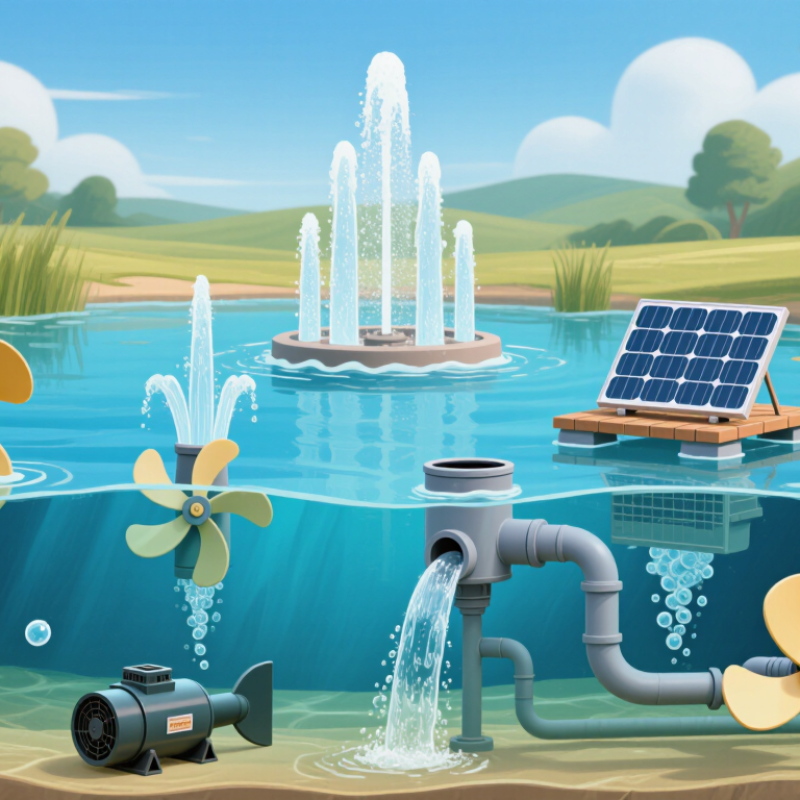
Choosing the right Surge Pond Aerator requires more than comparing motor power or advertised oxygen output. Pond depth, surface area, stocking density, electricity access, climate, and maintenance skills all influence performance. A compact paddlewheel may suit a shallow fish pond, while a diffused-air system can create better circulation in deeper water. Floating fountains offer visible movement, but appearance does not always equal effective oxygen transfer.

Dr. Claude E. Boyd, a leading aquaculture water-quality specialist, has stated, “Aeration is one of the most important management practices in aquaculture.” His practical work reminds global buyers to examine real pond conditions, not just product brochures. The ten aerator types discussed in this guide include paddlewheel, fountain, aspirating, venturi, diffused-air, submersible, solar, wind-powered, horizontal, and hybrid systems. Each design creates different flow patterns, energy demands, noise levels, and servicing requirements.

Small details matter. A clogged diffuser can reduce output. A weak cable connection can stop nighttime operation. Mud, algae, and floating debris may also shorten equipment life. No single model wins everywhere. That assumption deserves reconsideration. Buyers should request tested oxygen-transfer data, warranty terms, replacement-part availability, and installation guidance before ordering internationally. Supplier experience is valuable, but independent verification remains wiser. This overview offers a practical starting point for comparing Surge Pond Aerator options across different climates and pond applications. It also recognizes an uncomfortable truth: laboratory performance may differ from results beside a muddy, wind-exposed pond. A careful site trial can reveal what a catalogue cannot.

Top 10 Types of Surge Pond Aerators for Global Buyers

What Is a Surge Pond Aerator and Why Is It Used?

A surge pond aerator is a pond device that moves water in pulses, splashes the surface, or injects air below it. This action increases oxygen transfer and breaks stagnant layers. It can also reduce thermal stratification during hot, calm nights. Common designs include paddlewheel, surface impeller, fountain, aspirator, venturi, diffuser, airlift, pump-jet, solar, and hybrid aerators.

The need is substantial. FAO’s The State of World Fisheries and Aquaculture 2024 reported 94.4 million tonnes of aquatic animals from aquaculture in 2022. Many farms now operate ponds at higher stocking densities. Oxygen demand rises sharply after feeding, algae die-offs, and cloudy weather. Southern Regional Aquaculture Center guidance commonly treats 4 mg/L dissolved oxygen as a useful production target, although species and life stages differ. A handheld meter near dawn often reveals the real risk.

Tips: Size the aerator for pond depth, biomass, and nighttime demand. Check oxygen at several locations, not only beside the machine. A powerful unit can create uneven circulation. I have seen clear surface turbulence hide low oxygen near the bottom. Energy use also deserves attention. Intermittent operation may lower costs, but automatic control requires reliable sensors and maintenance. Surge equipment is not a cure for excess feed or organic sludge. That assumption needs reconsideration. Reported performance can change with salinity, water temperature, wind, and pond shape. Always compare field measurements with supplier test data and independent aquaculture guidance.

How Surge Pond Aerators Work in Different Pond Conditions

Top 10 Types of Surge Pond Aerators for Global Buyers

How Surge Pond Aerators Work in Different Pond Conditions

Surge pond aerators move oxygen-rich water through repeated lifting, spraying, or pulsed circulation. Common types include paddlewheel, fountain, aspirator, diffuser, jet, propeller-aspirator, vertical pump, submersible, solar, and wind-powered units. Each creates a different water pattern. Paddlewheels suit broad, shallow ponds. Diffusers work quietly in deeper zones. Fountains improve surface exchange but may struggle with heavy algae or strong wind.

Pond conditions change performance. Warm water holds less oxygen, while feeding and cloudy weather increase oxygen demand. The FAO State of World Fisheries and Aquaculture 2024 reports that aquaculture supplied 51% of global aquatic animal production in 2022. That scale makes reliable oxygen management increasingly important. Practical field guidance from the U.S. Environmental Protection Agency identifies dissolved oxygen as a key indicator of aquatic health, although safe levels vary by species and temperature. Many operators treat 5 mg/L as a useful warning point, not a universal rule. Night readings can reveal problems hidden by daytime photosynthesis.

Tips: Match aerator depth, airflow, and circulation distance to pond shape. Measure oxygen before sunrise. Clean blocked screens and diffusers regularly. Solar models may underperform during cloudy mornings. Wind units can stop when oxygen demand is highest. Field results are rarely perfect; test, record, and adjust rather than trusting rated capacity alone.

Top 10 Types of Surge Pond Aerators for Global Buyers — How Surge Pond Aerators Work in Different Pond Conditions
Aerator Type How It Works Pond Conditions It Suits Typical Strengths Key Considerations
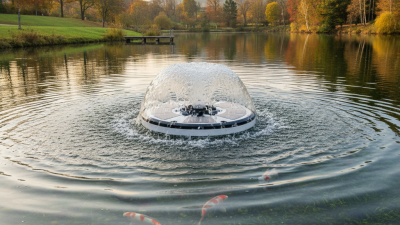
Floating Fountain Aerator A pump draws water from below the surface and sprays it into the air. Oxygen transfer occurs as the droplets contact air and when the spray returns to the pond. Small to medium ponds with open water, moderate depth, and a need for visible surface movement. Creates a display while adding surface aeration; relatively simple to install in suitable open water. Oxygen transfer varies with fountain design and operating conditions. Spray can be affected by wind, and fountains may not mix deep bottom water effectively.
Surface Spray or Aspirator Aerator A motor-driven propeller or impeller moves water and draws air into the flow, producing a turbulent, oxygen-exchanging spray or plume. Shallow to moderately deep ponds that need active surface circulation and rapid mixing near the unit. Combines water movement with air entrainment; useful where localized circulation is needed. Performance depends on water depth, equipment orientation, and placement. Strong circulation may disturb sediment in very shallow or muddy ponds.
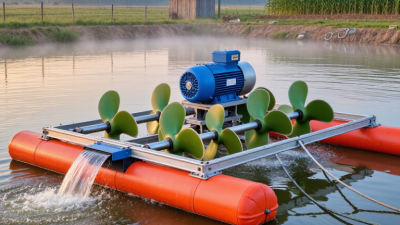
Horizontal Paddlewheel Aerator Rotating paddles splash water into the air and push it horizontally, creating surface turbulence and a circulation current. Broad, shallow ponds and aquaculture ponds where horizontal circulation is practical. Produces strong surface movement and can help distribute oxygenated water across an open area. Requires clear space for water flow and secure mounting. Circulation patterns depend on pond shape and unit position.
Vertical Pump or Impeller Aerator A submerged impeller draws water upward and discharges it at the surface, where it spreads and exchanges gases with the air. Small to medium ponds where vertical lifting and surface agitation are desired. Can create a concentrated upward plume and noticeable surface circulation. May provide limited whole-pond circulation in irregular or very large ponds; check that intake and discharge depths suit the site.
Propeller-Aspirator Aerator A propeller moves water while an air-intake tube entrains atmospheric air into the discharge stream. Ponds needing localized mixing, including some deeper areas where the unit can be positioned to move water effectively. Combines mechanical circulation and air introduction; can create a strong directional flow. Actual oxygen transfer depends on the model, water conditions, and installation. Avoid directing high-velocity flow at banks or sensitive habitat.
Diffused-Air Aeration System An air blower sends air through tubing to submerged diffusers. Rising bubbles transfer some oxygen and lift deeper water toward the surface. Deeper ponds where bottom-water circulation is important and a surface display is not required. Can circulate water through much of the pond when diffuser layout and airflow are properly designed. Oxygen transfer is influenced by bubble size, depth, diffuser condition, and water quality. Installation and maintenance of air lines are required.
Submersible Mixer Aerator A submerged propeller or mixer moves water through the pond; some designs also introduce air or work alongside a separate air supply. Ponds with stagnant zones or a need to direct circulation around structures, inlets, or irregular shorelines. Allows targeted water movement without relying on a surface spray. A mixer alone does not necessarily add substantial oxygen. Confirm whether the selected system is designed for aeration or only circulation.
Jet Aerator A pump sends water through a nozzle to form a high-velocity jet, which mixes with surrounding water and may entrain air depending on the design. Small or medium ponds needing directional circulation, especially where a localized jet can reach stagnant areas. Provides controllable, focused movement and can be installed below or near the surface. Not all water jets entrain air efficiently. Nozzle direction and flow rate should be selected to avoid excessive bank erosion or sediment disturbance.
Solar-Powered Aerator Photovoltaic panels power a surface aerator, air pump, or circulation unit; some systems use battery storage, while others operate mainly during sunlight. Remote ponds with good solar exposure and limited access to grid electricity. Can reduce grid-power needs and simplify deployment at off-grid sites. Output changes with sunlight, season, panel shading, and storage capacity. Check whether nighttime or cloudy-weather operation is required.
Wind-Powered Mechanical Aerator A wind rotor drives a mechanical linkage or air pump that moves water or supplies air to submerged diffusers. Remote ponds in reliably windy locations where intermittent operation is acceptable. Can operate without a grid connection and may suit locations with consistent wind exposure. Output depends on wind speed and system design; calm periods can reduce or stop aeration. A backup plan may be needed where continuous oxygen supply is critical.
Selection note: “Surge pond aerator” is not a single standardized equipment category. Aerator performance depends on pond area, depth, shape, water quality, temperature, and the required circulation pattern. Confirm site conditions and manufacturer-rated performance before sizing or installation.

The 10 Main Types of Surge Pond Aerators

The 10 Main Types of Surge Pond Aerators

Pond aeration now supports a growing aquaculture economy. The FAO’s 2024 report recorded 130.9 million tonnes of global aquaculture production in 2022. OECD-FAO projections indicate aquaculture may provide 55% of aquatic animal production by 2032. These figures increase pressure on farmers to control oxygen, mixing, and nighttime water quality. Small design errors can still cause costly oxygen crashes.

The ten main types include paddlewheel, propeller-aspirator, vertical pump, fountain, diffuser, jet, venturi, solar, wind-powered, and hybrid aerators. Paddlewheels create strong horizontal circulation in rectangular ponds. Vertical pumps lift water and expose it to air. Fountains suit ornamental or shallow ponds, but they may lose efficiency during wind. Diffusers release fine bubbles near the bottom. Jet and venturi systems draw air into fast-moving water.

Selection depends on pond depth, stocking density, electricity access, and maintenance skill. A diffuser may perform well in deep water, while a paddlewheel often suits intensive rectangular ponds. Solar units reduce grid dependence, although battery performance can fall after several cloudy days. Hybrid systems add resilience, but their controls can be harder to repair locally. The U.S. Environmental Protection Agency’s aeration guidance links oxygen transfer with equipment efficiency, water temperature, and operating conditions. That relationship is frequently underestimated. Buyers should compare oxygen-transfer performance, not only motor power. Test results may also vary between clean water and muddy production ponds. A neat classification helps, but it remains imperfect in real farms.

How to Compare Performance, Installation, and Maintenance

Top 10 Types of Surge Pond Aerators for Global Buyers

Comparing surge pond aerators starts with oxygen transfer, circulation, and energy use. The main types include paddlewheel, aspirator, surface spray, fountain, propeller, jet, diffuser, submersible, solar, and hybrid aerators. Paddlewheels move water strongly across broad ponds, while diffusers release fine bubbles from weighted lines. Aspirators suit deeper mixing, but their output can drop when water contains heavy solids. Do not judge performance by motor power alone. Check oxygen transfer efficiency, mixing radius, noise, and performance under local temperature conditions. Measure dissolved oxygen before and after installation.

Installation details often decide real-world results. Surface units need stable floats, safe anchor points, and enough clearance from pond banks. Diffuser systems require careful hose routing and protected electrical connections. Solar units reduce cable work, yet cloudy weather can limit night-time operation. Heavy aerators may need lifting equipment. Small mistakes matter. A poorly positioned unit can leave stagnant corners despite strong surface movement.

Maintenance should be compared over a full operating season, not one inspection. Inspect impellers, screens, floats, cables, air filters, and anchor ropes at scheduled intervals. Remove algae and sediment before they restrict flow. Keep service access clear, especially on large ponds. Some systems are simple to clean but use more electricity. Others save power but require more technical checks. A spreadsheet can mislead. Field records, electricity readings, dissolved oxygen data, and repair time provide more reliable evidence for global buyers.

How Global Buyers Can Select the Right Aerator

Top 10 Types of Surge Pond Aerators for Global Buyers

Selecting a surge pond aerator starts with water conditions, not catalog popularity. The ten common types include paddlewheel, surface spray, fountain, diffuser, aspirating, propeller-aspirator, vertical turbine, jet, solar, and blower-based systems. Each moves oxygen differently. Paddlewheels suit broad ponds with strong circulation needs. Diffusers work well in deeper water, but require reliable air delivery. Fountains add visible circulation, although wind can reduce their practical reach.

Measure pond area, average depth, organic loading, and seasonal temperature changes. Warm water holds less oxygen and may demand longer operating hours. Check dissolved oxygen at dawn, when levels often reach their lowest point. A small meter provides more useful evidence than appearance alone. Do not select by motor power only. Oxygen transfer depends on depth, water quality, altitude, and installation position.

Global buyers should verify voltage, frequency, enclosure protection, local electrical approvals, and replacement-part availability. Coastal sites need stronger corrosion resistance. Cold regions need suitable cable flexibility and freeze-aware installation planning. Ask for tested oxygen-transfer data, but treat laboratory figures carefully. Field performance can differ. I have seen well-sized units underperform after poor anchoring or clogged intake screens. Budget for cleaning, spare components, and technician access. The cheapest purchase may become expensive when service is slow. Some choices remain uncertain, especially where pond records are incomplete. That uncertainty should be recorded, not hidden.

Top 10 Types of Surge Pond Aerators for Global Buyers — How Global Buyers Can Select the Right Aerator

The chart compares indicative equipment power ranges commonly used for pond aeration. Smaller paddlewheels, aspirating propeller units, airlift systems, and diffused-air systems are often selected for smaller ponds or targeted oxygenation. Vertical turbines, jet systems, submersible units, and large diffused-air systems can support deeper or higher-load applications. Actual selection should also consider pond depth, water volume, oxygen demand, salinity, suspended solids, local voltage, maintenance access, noise limits, and the required dissolved-oxygen level.