How to Choose the Best Ring Blower in 2026?
Choosing the best Ring Blower in 2026 requires more than comparing prices, motor ratings, or glossy efficiency claims. The correct choice begins with the application. Airflow, pressure, operating hours, temperature, installation height, and noise limits must all be measured before selection.
Dr. Karl Jousten, a recognized vacuum-technology specialist and editor of the Handbook of Vacuum Technology, offers a useful principle: “Vacuum performance depends on the complete system, not the pump alone.” This idea applies directly to every Ring Blower installation. A blower may deliver impressive airflow on a catalog page, yet perform poorly through a narrow hose, blocked filter, or undersized silencer.
Look beyond the nameplate.
In practical testing, technicians should record pressure at the actual inlet and outlet points. They should also inspect vibration after several hours of continuous operation. A warm motor casing, unstable airflow, or rising electrical demand can reveal problems early. These details often matter more than a small efficiency difference in a brochure.
This guide examines how to compare Ring Blower designs, including single-stage and multi-stage models. It considers airflow control, pressure capability, motor efficiency, sound levels, maintenance access, and total operating cost. However, no selection method is perfect. Site conditions change, measurements can be incomplete, and supplier data may use different testing standards. A careful buyer should question every assumption, verify performance under real conditions, and leave reasonable safety margin for future demand.
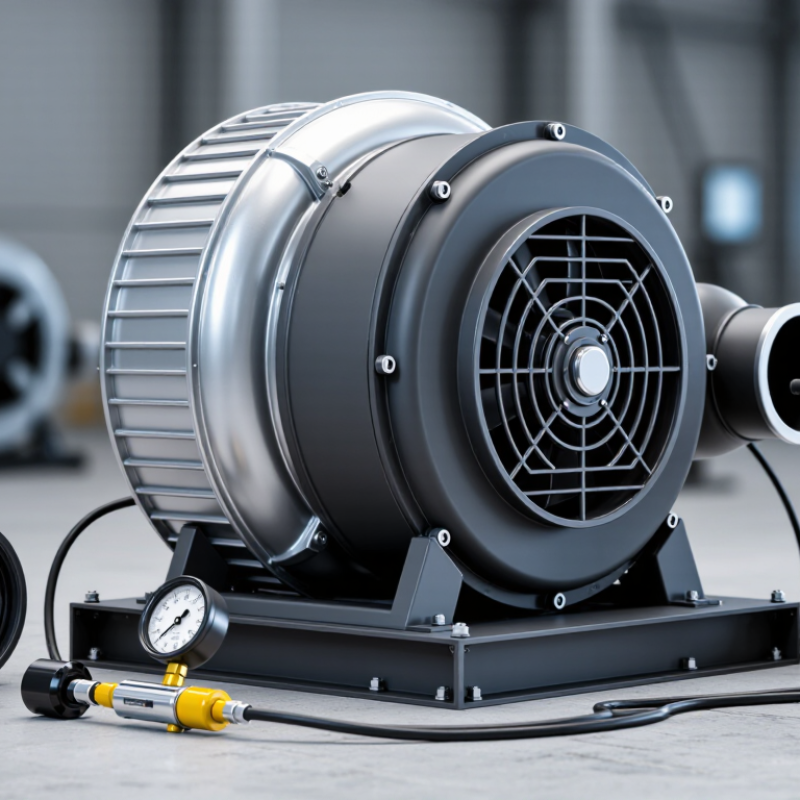
Understanding Ring Blower Types and Operating Principles
How to Choose the Best Ring Blower in 2026?
Understanding the working principle makes selection more reliable. A ring blower uses a fast rotating impeller to move air through a circular channel. The impeller creates repeated pressure increases, unlike a basic fan. This design supports continuous airflow for aeration, suction, drying, and material handling. Single-stage models suit moderate pressure needs. Double-stage models provide higher pressure or vacuum. Oil-free construction also protects the air stream from lubricant contamination.
Check both pressure and airflow at the same operating point. A blower may show impressive airflow, but performance can drop sharply under resistance. Measure pipe length, bends, filters, and outlet restrictions. Temperature, noise, and motor efficiency also matter. In field applications, poor ventilation often causes avoidable overheating. I have noticed that selection charts can appear clear, yet real installations still require adjustment. That is worth remembering.
Tips: Match the blower to the duty cycle, not only the peak demand. Keep inlet filters clean and inspect unusual vibration early. Choose safety margins carefully. Oversizing wastes energy. Undersizing causes continuous strain. Review the pressure curve, electrical supply, ambient temperature, and installation space before purchasing. Ask for tested performance data when operating conditions are critical.
How to Choose the Best Ring Blower in 2026?
Understanding Ring Blower Types and Operating Principles
Ring blowers generate air movement through a non-contact impeller and a side channel. Adding impeller stages increases pressure capability, while single-stage designs generally provide higher airflow efficiency for moderate pressure requirements. The values shown are representative typical upper differential-pressure ranges; actual performance depends on impeller diameter, motor speed, inlet conditions, temperature, and system resistance.
Defining Airflow, Pressure, and Application Requirements
Choosing the right ring blower starts with defining the air your process actually needs. Airflow is usually measured in cubic meters per hour or cubic feet per minute. Pressure is measured at the blower outlet, not in free air. Pressure changes everything. Use measured values whenever possible.
A blower rated for high airflow may perform poorly against a restrictive filter or narrow pipe. Record pipe length, bends, diffuser depth, filter condition, and required vacuum or pressure. An aeration tank needs steady airflow through submerged diffusers. A conveying line may need higher pressure during short operating cycles.
Do not guess. Build a simple system map and estimate pressure loss at the target airflow.
Check the blower performance curve at your real operating point. Avoid selecting only by the maximum airflow figure. Leave practical capacity for filter loading, altitude, temperature, and gradual wear. Confirm motor voltage, duty cycle, noise limits, cooling conditions, and installation space. Field measurements with a calibrated pressure gauge can expose assumptions that look acceptable on paper.
A careful selection can still miss the mark when a filter becomes dirty. That is why service access matters. Recheck the requirements after installation, because actual resistance may differ from the original estimate.
Comparing Power Sources, Materials, and Performance Ratings
How to Choose the Best Ring Blower in 2026?
Power source affects installation cost, control, and reliability. AC ring blowers suit fixed industrial systems with steady duty cycles. DC models fit mobile equipment and compact automation. Variable-frequency drives can reduce energy use when demand changes, but the motor must support inverter operation. The U.S. Department of Energy reports that motor-driven systems consume more than half of industrial electricity. Small efficiency gains matter over long operating hours. Do not select a blower from airflow alone. Check voltage, frequency, starting current, and continuous-duty ratings.
Materials shape service life. Aluminum housings are light and dissipate heat effectively. Stainless steel is more suitable for humid, corrosive, or washdown environments. Seals and bearings deserve equal attention. A strong casing cannot compensate for weak internal parts. For performance, compare the complete pressure-flow curve under the same test conditions. ISO 1217 provides accepted methods for testing displacement compressors, while AMCA 210 covers airflow measurement practices. Look for rated airflow, maximum vacuum, pressure, sound level, efficiency, and IP protection. A higher pressure rating may reduce flow sharply. That trade-off is often missed.
Tips: Measure the real pipe length, bends, filters, and outlet restrictions. Leave operating headroom of about 10–15%, but avoid gross oversizing. Oversizing can increase noise and energy waste. Record inlet temperature and altitude, because both affect air density. I would also request test data, not only a catalog headline. Ratings may look precise, yet field conditions are rarely perfect.
Selecting the Best Ring Blower for Your Budget and System
How to Choose the Best Ring Blower in 2026?
Selecting the best ring blower starts with your system’s actual duty point, not its catalogue maximum. Record airflow, pressure or vacuum, operating hours, temperature, and filtration needs. A blower rated at 300 m³/h may deliver far less at 250 mbar. That gap can disrupt aeration, packaging, or material handling. I once selected by motor size alone. It worked briefly, but overheated during continuous operation.
Budget for electricity, maintenance, noise control, and replacement parts. The U.S. Department of Energy’s Improving Compressed Air System Performance sourcebook reports that leaks can waste 20–30% of compressor output. A poor seal or oversized pipe can quietly increase blower demand. DOE also indicates that reducing pressure by 2 psi may cut energy use by about 1%. Small changes matter. For example, a 1.5 kW blower running 8,000 hours annually uses 12,000 kWh. At $0.12 per kWh, electricity costs about $1,440 yearly.
Check the operating curve carefully. Avoid running continuously at the curve’s edge. Leave practical capacity for clogged filters, seasonal heat, and future expansion. A lower-cost model may appear attractive, yet a quieter, efficient unit can reduce enclosure and ventilation costs. The best choice is not always the most efficient on paper. Field conditions can disagree. Ask for test conditions, sound data, service intervals, and measured performance before purchasing.