Leave Your Message
Choosing a Floating Pump Aerator in 2026 requires more than comparing horsepower and price. The right unit must match pond size, water depth, oxygen demand, climate, and operating conditions. A decorative fountain may look attractive, yet it may not provide enough circulation for a heavily stocked pond. Performance matters more than appearance.
Experienced pond managers usually examine pumping capacity, oxygen transfer, energy consumption, float stability, and maintenance access. Ask for verified specifications, not vague marketing claims. Independent test data can reveal how an aerator performs in warm, still water. That detail matters because oxygen levels often fall overnight, especially during hot weather. A reliable model should also use durable materials, protected wiring, and a motor designed for continuous outdoor operation.
Real conditions can challenge laboratory figures. My initial sizing estimate might be wrong if algae, sludge, or unusual fish loads change the pond’s oxygen demand. Leave room for adjustment. Check noise levels near homes, cable protection, winter requirements, and local electrical standards before installation. Small oversights become expensive later. This guide explains how to compare Floating Pump Aerator options with practical judgment, technical evidence, and long-term reliability in mind. There is no perfect model. There is only a better fit for your water, budget, and maintenance habits.
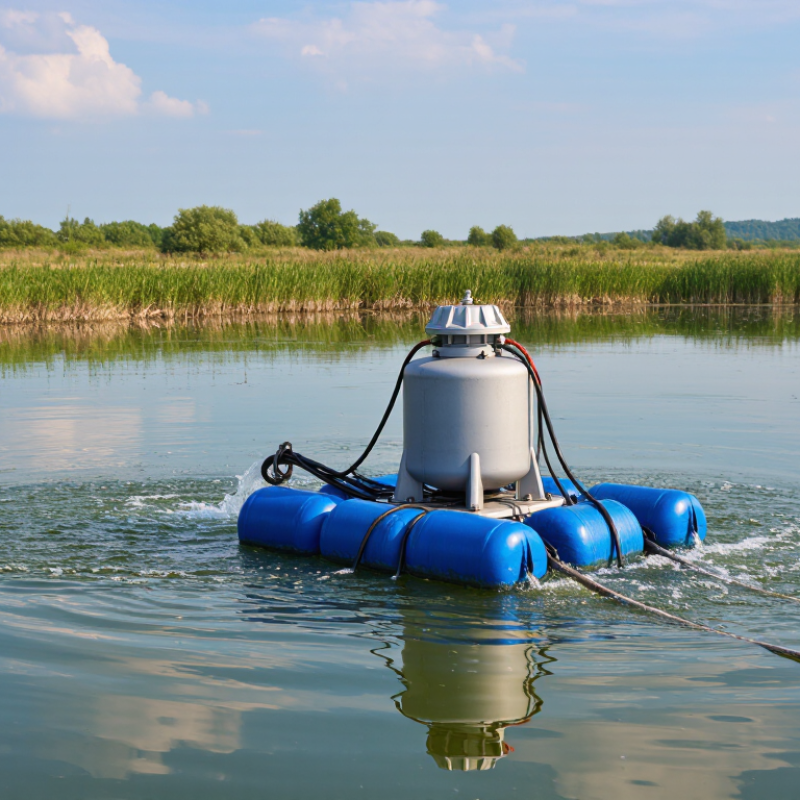
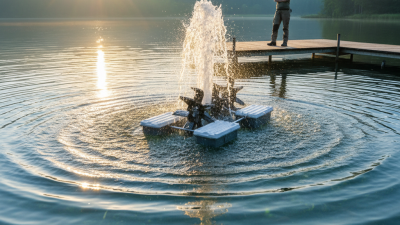
A floating pump aerator is a platform-mounted device that moves and oxygenates pond water. It usually draws water through an intake below the surface. A motor then pushes the water through an impeller, nozzle, or spray outlet. The resulting fountain breaks water into droplets and increases contact with air. This process supports dissolved oxygen levels and improves circulation near the surface.
Unlike a bottom diffuser, a floating pump aerator works mainly in the upper water layer. It suits decorative ponds, reservoirs, and some aquaculture systems. Choosing the correct unit requires checking pond size, depth, water movement, power supply, and expected oxygen demand. A larger motor is not always better. Excessive flow can disturb fish, erode banks, or waste electricity. My first selection would likely favor visible spray, but measured oxygen performance matters more. Appearance can be misleading.
Tips: Check the pump’s flow rate and operating depth. Keep the intake clear of leaves and mud. Use a grounded electrical connection and suitable protection. Test dissolved oxygen during warm, still mornings, when levels may fall sharply. Also inspect noise, vibration, and cable placement. Small maintenance details matter. No setup is perfect. Review seasonal changes and adjust operation when water temperature, algae, or stocking levels change.
| Selection Dimension | What It Means | Typical Data or Range | Why It Matters | Practical Selection Guidance |
|---|---|---|---|---|
| Definition | A floating pump aerator is a buoyant water-treatment unit that combines a floating platform, a pump or impeller, and an aeration mechanism. | Installed on the water surface and connected to the shore or a nearby electrical system. | It can aerate water without constructing a fixed platform or installing a permanently submerged mixer. | Choose a floating design when water levels change, the pond is deep or soft-bottomed, or flexible installation is important. |
| Basic Operating Principle | The motor drives an impeller or pump that lifts, sprays, splashes, or circulates water at the surface. | Water is exposed to air through droplets, surface turbulence, and air–water contact. | Greater contact between water and air promotes oxygen transfer and helps release certain unwanted gases. | Confirm whether the unit is intended mainly for oxygen transfer, circulation, visual display, or a combination of these functions. |
| Common Aeration Mechanism | Typical designs include surface spray, vertical-jet, propeller-driven, venturi-assisted, and pump-and-fountain configurations. | Surface-spray and fountain units create droplets; propeller units create horizontal or vertical circulation. | Different mechanisms produce different circulation patterns, noise levels, spray heights, and oxygen-transfer performance. | Select the mechanism according to pond geometry, required mixing depth, nearby buildings, and acceptable spray appearance. |
| Motor Power | The motor rating indicates the electrical input capacity needed to drive the pump or impeller. | Small pond units may use less than 1 kW; larger systems can require several kilowatts or more. | Higher power can support greater flow or mixing, but it also increases energy consumption and electrical demand. | Size power from the treatment objective, water volume, depth, and required operating hours rather than choosing the largest motor. |
| Flow Rate | Flow rate is the volume of water moved by the unit over time. | Usually specified in cubic metres per hour (m³/h), litres per minute (L/min), or gallons per minute (GPM). | Flow determines how quickly water is circulated and how effectively stagnant areas may be reached. | Compare flow figures only when they are measured under similar head, intake, and discharge conditions. |
| Oxygen Transfer | Oxygen transfer describes how efficiently atmospheric oxygen enters the water. | Manufacturers may report standard oxygen transfer rate (SOTR) in kg O₂/h and standard aeration efficiency (SAE) in kg O₂/kWh. | These values help compare aeration performance, but field results vary with temperature, altitude, water quality, and loading. | Use certified or clearly defined test conditions, and do not treat a laboratory rating as the exact field performance. |
| Water Volume and Pond Shape | The required aerator depends on the total water volume and how evenly the pond can be mixed. | Irregular ponds, narrow coves, islands, and sharp corners can create poorly mixed zones. | A single unit may leave dead spots even when its nominal capacity appears adequate. | Map the pond shape and consider multiple smaller units when circulation is uneven or the water body is highly irregular. |
| Water Depth | Depth affects circulation, stratification, intake position, and the risk of low-oxygen bottom water. | Surface fountains mainly affect the upper water layers; some pump designs provide stronger vertical mixing. | Surface agitation alone may not fully eliminate deep-water oxygen deficiencies in stratified ponds. | For deep ponds, evaluate vertical circulation capability and consider supplemental bottom-diffused aeration if needed. |
| Electrical Supply | The unit must match the available voltage, phase, frequency, circuit capacity, and protection system. | Common installations use single-phase or three-phase AC power; exact requirements vary by motor size and location. | Incorrect electrical matching can cause nuisance tripping, overheating, reduced motor life, or unsafe operation. | Verify the nameplate, full-load current, starting current, cable size, grounding, and local electrical requirements. |
| Energy Efficiency | Energy efficiency reflects the aeration or circulation benefit delivered for each unit of electricity consumed. | Useful comparison metrics include SAE, oxygen transferred per kWh, and flow per kW. | Electricity is often the largest recurring operating cost over the service life. | Compare performance at the intended operating point and calculate annual energy use from the planned daily schedule. |
| Operating Schedule | The aerator may run continuously, during low-oxygen periods, or on a programmed schedule. | Night and early-morning operation can be important because photosynthesis stops after dark. | Scheduling affects dissolved oxygen, energy use, noise, and equipment wear. | Use dissolved-oxygen measurements where possible and avoid abrupt over-aeration in heavily loaded or poorly mixed water bodies. |
| Floatation and Stability | Floats keep the pump at the intended operating position and must resist movement, water absorption, and weather exposure. | Materials commonly include UV-resistant polymers, sealed foam, stainless steel, or coated structural components. | Unstable floatation can alter spray patterns, increase vibration, and expose the motor or intake to damage. | Check buoyancy margin, wave conditions, anchoring points, corrosion resistance, and the recommended mooring arrangement. |
| Intake Protection | A screen, guard, or suitable intake design helps prevent leaves, algae, sticks, and aquatic organisms from entering the pump. | Screen openings must balance blockage resistance with protection of the pump and surrounding organisms. | Clogged intakes reduce flow, increase load, and may cause overheating or loss of aeration. | Choose an accessible intake guard and establish a cleaning schedule based on seasonal debris and algae conditions. |
| Water Quality Conditions | Algae, suspended solids, sediment, salinity, temperature, and corrosive chemicals influence equipment performance. | High solids and fibrous algae can increase clogging; saline or corrosive water requires suitable wetted materials. | Water chemistry and debris can shorten component life or reduce hydraulic performance. | Review material compatibility and specify overload, clog-resistant, or corrosion-resistant features where appropriate. |
| Noise and Spray Control | Surface turbulence, motor operation, and falling water create sound and possible splash or mist. | Noise and spray vary with motor size, impeller type, nozzle design, wind, and installation distance. | Noise or overspray may affect homes, walkways, livestock, electrical equipment, or neighboring properties. | Use a low-splash configuration, suitable anchoring, and an appropriate operating schedule near sensitive areas. |
| Safety Requirements | Floating electrical equipment requires protection against electric shock, short circuits, mechanical contact, and unauthorized access. | Typical safeguards include grounding, residual-current protection, overload protection, weatherproof connections, and visible warning signs. | Water and electricity create a high-risk environment when installation or maintenance is improper. | Have electrical work completed by qualified personnel and isolate the power before entering the water or handling the unit. |
| Maintenance Access | Routine service may include cleaning the intake, checking floats and mooring lines, inspecting cables, and examining seals. | Inspection frequency depends on debris, algae, operating hours, water chemistry, and weather. | Regular maintenance helps preserve flow, oxygen transfer, safety, and motor life. | Prefer designs with accessible screens, replaceable wear parts, clear service instructions, and readily available technical documentation. |
| Weather and Seasonal Use | Wind, waves, ice, storms, and changing water levels can affect floating equipment. | Ice-prone locations may require seasonal removal or a manufacturer-approved winter procedure. | Severe weather can damage floats, mooring lines, electrical cables, and the pump assembly. | Plan for storm shutdown, winter storage, water-level changes, and inspection after extreme weather. |
| Installation Method | Most units are positioned with ropes, chains, cables, or anchors designed to hold the aerator in a defined area. | Mooring layouts vary according to pond depth, wind direction, water-level fluctuation, and unit thrust. | Poor anchoring can cause drift, cable stress, collision with banks, or uneven treatment. | Follow the specified mooring geometry and keep electrical cables separate from moving or abrasive components. |
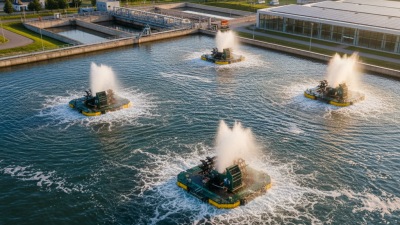
| Best-Fit Application | Floating pump aerators are commonly used in ponds, decorative lakes, reservoirs, aquaculture systems, and wastewater basins. | They are suitable where surface agitation, oxygen addition, or water circulation is required. | The correct configuration depends on whether the primary goal is water quality, aquaculture support, odor control, or appearance. | Define the primary treatment goal first, then compare flow, oxygen transfer, energy use, maintenance, and site constraints. |