Who Are the Top Regenerative Blower Suppliers in China?
Choosing among China’s leading Regenerative Blower suppliers takes more than comparing catalog prices. Buyers need to match airflow, pressure, operating hours, and installation conditions to the actual application. A blower serving a wastewater aeration tank may face different demands from one conveying powder through a compact production line. Small details matter.
Theodore von Kármán, a pioneer in aeronautics and fluid dynamics, is often credited with the observation: “Scientists study the world as it is; engineers create the world that has never been.” The remark is not specific to blowers, but it captures an important selection principle: performance claims should be tested against real operating needs. Ask suppliers for clear specifications, operating curves, noise data, materials information, and warranty terms. Where possible, verify them against the intended duty point.
This guide examines suppliers through practical criteria, including product range, manufacturing capability, customization, documentation, and after-sales support. It does not assume that the biggest catalog signals the best fit. Nor should a low quotation settle the question. A sample, technical discussion, or reference check can reveal gaps that a polished brochure cannot. Supplier information can change, and this comparison should be treated as a starting point, not a final verdict. A careful buyer may still find surprises.
Regenerative Blower Basics: Side-Channel Airflow and Pressure Generation
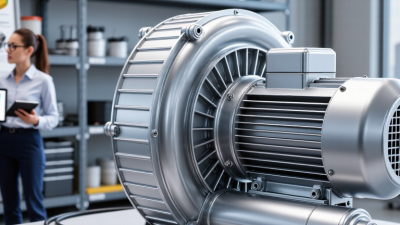
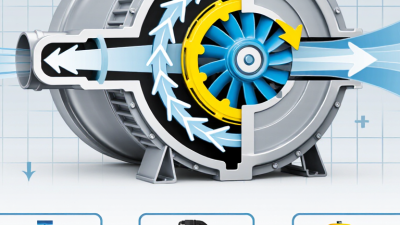
A regenerative blower moves air through a side channel using a bladed impeller. Air enters near the impeller’s center, then the blades accelerate it outward. The air loops through the channel and returns to the blades repeatedly, gaining energy along the way. This recirculating motion creates pressure and steady airflow without a conventional compression chamber. It is a simple principle. Real performance depends on the operating point.
The U.S. Department of Energy’s Improving Compressed Air System Performance, third edition, reports that compressed-air systems use roughly 10% of electricity in U.S. manufacturing. That broad figure is not a regenerative-blower efficiency rating. For a specific installation, check the blower’s performance curve against required flow, pressure, and system resistance. A neat diagram makes airflow look simple; actual pipework, filters, and leaks can complicate it. When comparing suppliers, request test conditions and sound-pressure data, not just maximum-pressure figures.
Tips: Check the duty point on the curve before sizing. Allow for filter and pipe losses. Small details matter. If the application needs high pressure at low flow, a side-channel unit may not be the right fit.
Key Specifications: Typical 10–60 kPa Pressure and 50/60 Hz Power Supply
Regenerative blowers commonly operate within a 10–60 kPa pressure range, but the required pressure must be checked against airflow at the actual duty point. A unit rated for 40 kPa may not deliver the required flow at that pressure. Ask suppliers for performance curves showing pressure, flow, power, and inlet conditions. Small details matter: warm air, restrictive filters, and long pipe runs can shift operating performance. Measure the system, not just the nameplate.
Frequency also affects selection. For the same motor pole count, synchronous speed at 60 Hz is 20% higher than at 50 Hz. That can change flow, pressure, power draw, and motor loading. The U.S. Department of Energy’s Improving Fan System Performance sourcebook describes the conventional fan affinity laws: flow varies with speed, pressure with speed squared, and power with speed cubed. These are useful reference relationships, not a substitute for a regenerative blower’s own curve. Ask suppliers to confirm 50 or 60 Hz compatibility, voltage, continuous-duty limits, and thermal protection. One caveat: I would not assume a frequency change is harmless. Small selection errors can become noisy, hot installations.
Regenerative Blower Specification Reference
Typical pressure range: 10–60 kPa. Available power supply frequency may be 50 Hz or 60 Hz, depending on the model and market.
This chart presents a general specification range, not a supplier ranking. Confirm pressure performance and frequency compatibility with the specific model documentation.
Leading Supplier Profiles: Certifications, Production Capacity, and Service Networks
A credible profile of a Chinese regenerative blower supplier should begin with verifiable records. Check whether certificates are current and cover the relevant factory, quality system, or product category. A certificate alone does not prove that every blower meets your operating needs. Ask for test reports showing airflow, pressure, noise, and power consumption at stated conditions. Details matter.
Production capacity is more than a monthly output figure. Ask how many units are assembled and tested each week, and whether capacity changes during peak orders. A practical supplier can describe its motor sourcing, impeller balancing, and final inspection steps. Request a sample inspection sheet. Look for serial numbers, measured values, and clear acceptance limits. Still, a polished spreadsheet can hide bottlenecks; confirm claims through a factory audit or a live production review where possible.
Service networks deserve equal attention. Ask where technicians and spare parts are located, how support requests are handled, and what response time the supplier can commit to. For export projects, confirm access to installation guidance, wiring documents, and troubleshooting support in your working language. Get those commitments in writing. A strong profile combines documented quality, realistic production figures, and reachable support. Gaps happen. The useful question is how the supplier reports and resolves them.
How to Compare Suppliers: Airflow, Efficiency, Noise, and IP Protection Ratings
A regenerative blower supplier should provide performance curves, not just a headline airflow figure. Compare airflow at your actual operating pressure: a unit rated at 100 m³/h in free air may deliver less when connected to narrow tubing, filters, or a deep tank. Ask for test conditions and whether results follow ISO 5801 or an equivalent fan-performance method. The International Energy Agency estimates that motor-driven systems use about 40% of global electricity, so small efficiency differences can matter in continuous-duty installations. That figure covers many motor applications, not blowers alone.
Check efficiency at the duty point, then compare sound-power data measured under ISO 3744 or a comparable method. Sound pressure in a showroom can mislead; ask for distance, room conditions, and load. For protection, read the complete IP rating under IEC 60529. The first digit describes protection from solids, and the second from water. Match the rating to dust, washdown, and installation exposure. Higher protection is not automatically better if it raises cost or restricts cooling. I would also check service access; datasheets rarely show how awkward a clogged inlet can be.
Tips: Request a test report, not only a brochure. Compare identical pressure, airflow, voltage, and frequency. Record noise at the operator’s position, and confirm the IP rating on the nameplate. If figures seem unusually neat, ask how they were measured.